On this page (34)
- How to Get an ISBN and Copyright Your Book Without Overpaying or Making Mistakes
- ISBN vs Copyright: What Is the Difference?
- What Is an ISBN?
- Do You Need an ISBN?
- How Much Does an ISBN Cost?
- Single ISBN or a block of ten?
- Free ISBN vs Your Own ISBN
- How to Get an ISBN in the US: Step by Step
- ISBN Scams and Mistakes to Avoid
- What Is Copyright?
- Should You Register Your Copyright?
- Current registration costs
- How to Register Your Copyright, Step by Step
- What to Include on Your Copyright Page
- Do You Need a Library of Congress Number?
- Barcodes and the Back Cover
- Putting It All Together: Choosing the Right Setup
- Scenario 1: Ebook only on Amazon
- Scenario 2: Paperback on KDP only, tight budget
- Scenario 3: Paperback, ebook and bookstore distribution
- Scenario 4: Author building a brand with multiple books
- Checklist: ISBN and Copyright Before You Publish
- Frequently Asked Questions
- How do I get an ISBN for my book?
- How much does an ISBN cost?
- Do I need an ISBN to sell on Amazon?
- Can I use the same ISBN for paperback and ebook?
- Does an ISBN protect my book?
- Is my book automatically copyrighted?
- How much does it cost to copyright a book?
- Should I register my copyright before or after publishing?
- Can I switch from a free ISBN to my own later?
- Do I need a new ISBN for a second edition?
- Do I need a barcode?
How to Get an ISBN and Copyright Your Book Without Overpaying or Making Mistakes
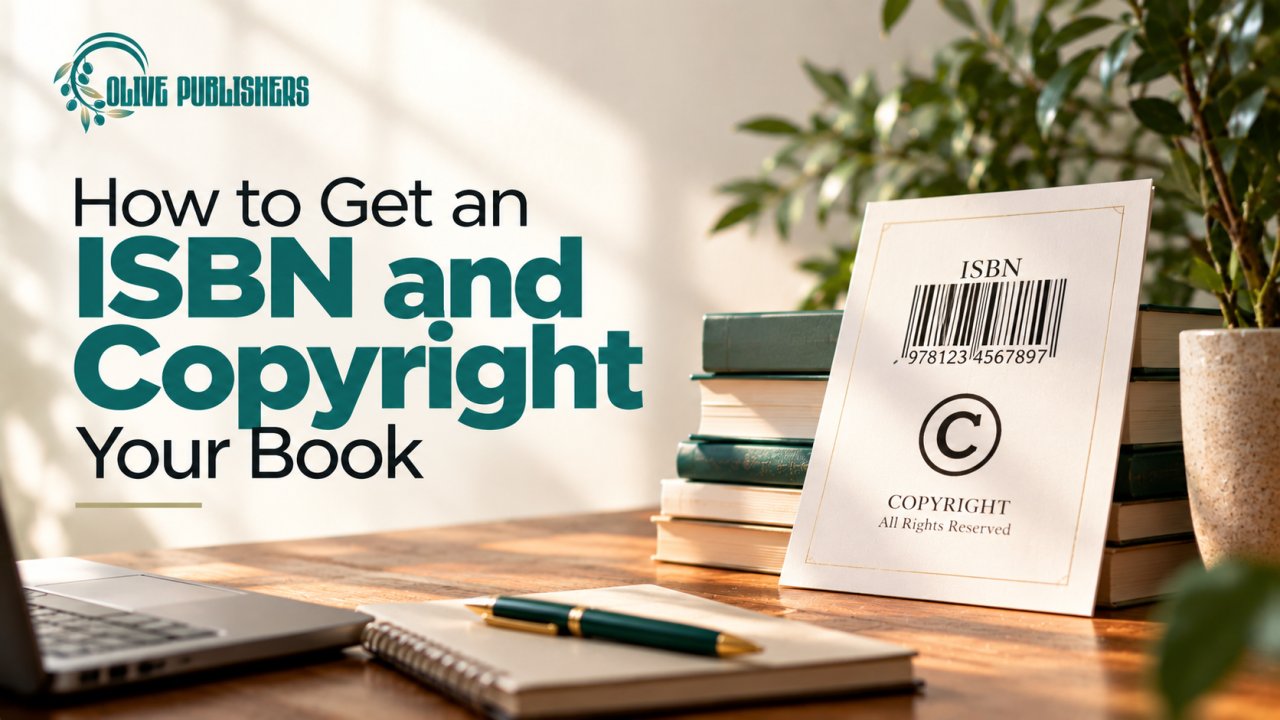
Quick answer: An ISBN is a 13-digit identifier that retailers and libraries use to track a specific edition of your book. Copyright is a legal right that protects your writing. In the US, you buy ISBNs from Bowker ($125 for one, $295 for ten), or use a free platform ISBN with limits. Your copyright exists automatically once your work is written down, and you can optionally register it with the US Copyright Office, where the fee is currently listed at $45 for a single author registering a single work online.
Two of the most confusing topics for new authors are ISBNs and copyright. People mix them up, pay for services they do not need, or skip steps that would have protected them. This guide separates the two clearly, explains what each costs in the United States, and shows you how to make smart choices without overspending.
ISBN vs Copyright: What Is the Difference?
|
Feature |
ISBN |
Copyright |
|
What it is |
A unique identifier for a book edition |
A legal right protecting your creative work |
|
Purpose |
Identification, cataloging, sales tracking |
Ownership and protection from copying |
|
Who issues it |
In the US, Bowker is the official agency |
Arises automatically; registration is through the US Copyright Office |
|
Required to sell? |
Often required for print and wide distribution |
No, but protection is automatic |
|
Cost |
$125 single or $295 for ten in the US |
$0 for automatic copyright; registration fee optional |
|
Covers |
One specific format or edition |
Your writing and original content |
An ISBN does not protect your book from being copied. Copyright does that. And copyright registration does not make your book sellable in stores. An ISBN does that. You usually need to consider both.
What Is an ISBN?
ISBN stands for International Standard Book Number. Since 2007, ISBNs have been 13 digits long. The number identifies a specific edition and format of a book, along with its publisher.
Key facts:
• Each format needs its own ISBN. Paperback, hardcover, ebook and audiobook are treated as separate products, so each should have a different ISBN. Reusing one number across formats can cause listing problems.
• A new edition usually needs a new ISBN, particularly when there are major content changes. Minor corrections such as fixing a typo or changing a price do not require a new ISBN.
• The ISBN connects to metadata such as title, author, publisher, price and subject categories, which retailers, libraries and bookstores use.
Do You Need an ISBN?
You probably need one if:
• You are selling print books through retailers, bookstores or libraries
• You want to distribute widely beyond a single platform
• You want to be listed as the publisher of record under your own name or imprint
• You plan to publish multiple formats
You may not need to buy one if:
• You are publishing an ebook only on a single platform such as Amazon, which assigns its own identifier
• You are publishing a print book only on KDP and accept a free KDP ISBN
• You are producing a book for personal or private use
How Much Does an ISBN Cost?
In the United States, Bowker is the only official ISBN agency. Published pricing:
|
Quantity |
Price |
Cost Per ISBN |
|
1 |
$125 |
$125 |
|
10 |
$295 |
$29.50 |
|
100 |
$575 |
$5.75 |
Some platforms resell Bowker ISBNs at lower prices, such as KDP and IngramSpark, and these are reported to be genuine ISBNs registered in your name. Prices change, so confirm the amounts on the seller's official page before purchasing.
In other countries, ISBN rules differ. Canada issues ISBNs for free to Canadian publishers, and the UK and Australia have their own agencies and prices.
Single ISBN or a block of ten?
If you plan more than one format of this book, or any future books, a block of ten is usually better value. A single paperback plus an ebook plus a hardcover already uses three numbers.
Free ISBN vs Your Own ISBN
Several platforms offer free ISBNs. These are convenient but come with limits.
|
Factor |
Free Platform ISBN |
Your Own ISBN |
|
Cost |
Free |
Paid |
|
Ownership |
Registered to the platform |
Registered to you or your imprint |
|
Where it can be used |
Only on that platform |
Anywhere you choose |
|
Publisher name shown |
Often the platform, such as "Independently published" on KDP |
Your chosen name |
|
Switching later |
The ISBN stays with the platform |
Portable between platforms |
|
Best for |
Amazon-only print books, tight budgets |
Wide distribution, bookstores, long-term brand |
According to current industry guides, a free KDP ISBN is locked to KDP and cannot be reused elsewhere, and once a book is published with it, it stays attached to that edition. If you think you might distribute through IngramSpark or other print networks later, using your own ISBN from the beginning avoids a messy re-release.
How to Get an ISBN in the US: Step by Step
1. Decide how many ISBNs you need. Count formats and future books.
2. Go to Bowker's official ISBN site. Be careful to use the real site and avoid look-alike resellers.
3. Create an account and purchase your ISBNs.
4. Assign an ISBN to each format when you publish. Record which number belongs to which edition.
5. Enter your metadata in the Bowker system, including title, author, format, publication date and subject.
6. Use the correct ISBN on your copyright page, cover barcode and retailer listings.
7. Create the barcode. Many printers and cover designers can generate it from your ISBN, and free tools can produce standard barcodes.
If you want help with these steps, a professional self-publishing service can guide you through ISBN setup and make sure it is connected to your publishing accounts correctly.
ISBN Scams and Mistakes to Avoid
• Third-party resellers with unclear ownership. Some resellers sell ISBNs registered to themselves rather than to you, which can leave you without real control. If you buy from a reseller, confirm in writing that you will be listed as publisher.
• Reusing one ISBN for multiple formats.
• Using an ISBN that belongs to someone else.
• Typing the wrong ISBN on your cover or listing. A mismatch can cause fulfillment problems.
• Assuming an ISBN gives you copyright. It does not.
• Paying extra for a barcode when your cover designer or printer can supply one.
What Is Copyright?
Copyright is the legal right that gives you control over how your original creative work is used. In the United States, copyright begins automatically when your work is "fixed in a tangible form," meaning it is written, typed or otherwise recorded. You do not have to register or pay anything to have copyright.
Copyright generally covers:
• The text you wrote
• Your original illustrations and photographs
• The selection and arrangement of material in a collection
• The cover art, if you created it or have the rights
Copyright does not protect:
• Ideas, themes or concepts
• Facts and general information
• Titles, short phrases and names
• Simple lists of ingredients or basic instructions
Should You Register Your Copyright?
Registration is optional but strongly recommended for books you plan to sell, because it creates a public record and supports your ability to take legal action if someone infringes. In the United States, registration is generally required before you can file an infringement lawsuit for a US work, and timely registration can affect what damages you can pursue. Because legal rules are detailed, consult an attorney if you have specific concerns.
Current registration costs
The US Copyright Office currently lists these basic fees for online registration:
• Single application: $45, for one author registering one work that is not a work made for hire and where the author is also the claimant
• Standard application: $65, for other situations, such as multiple authors or works made for hire
• Paper filing: higher, around $125 for the paper route
The Authors Guild has reported that the Copyright Office has proposed fee increases and has suggested eliminating the single application, so check the Copyright Office website for the current fee schedule before filing.
How to Register Your Copyright, Step by Step
1. Finish your final manuscript. Register the version you intend to publish.
2. Create an account on the US Copyright Office's online registration system.
3. Choose the correct application type, usually "Literary Work."
4. Enter details: title, author name, year of completion, publication status and claimant.
5. Pay the fee.
6. Submit your deposit copy. For unpublished works this is typically uploaded digitally. For published works, requirements can include physical copies depending on the case.
7. Wait for processing. Timelines vary, and you can usually check status online.
8. Receive your certificate of registration.
You do not have to wait for registration to publish. Many authors register around the time of publication.
What to Include on Your Copyright Page
Your copyright page, usually on the back of the title page, commonly includes:
• The copyright notice: "Copyright © [Year] [Author Name]. All rights reserved."
• The publisher or imprint name
• The ISBN for each format
• Edition information
• A rights statement, such as a limit on reproduction without permission
• A disclaimer if the work is fiction, nonfiction advice or based on real events
• Credits for cover design, editing or illustration
• Bible translation notices or permissions credits, if applicable
• Printing information, if relevant
A professional book formatting team can create this page correctly and match it to your ISBN and edition details.
Do You Need a Library of Congress Number?
Some self-published authors choose to request a Library of Congress Control Number, which libraries use for cataloging. Eligibility and procedures depend on the program rules, so check the Library of Congress website for the current requirements before applying. It is optional for most self-published books.
Barcodes and the Back Cover
A barcode is the visual form of your ISBN. It must appear on the back cover of print books sold through retail. Place it in the lower area of the back cover with a clear background, and test it with a scanning app. Details of design and placement are covered in our guide to what goes on the back cover of a book, and a professional book cover design can make sure the spacing meets printer specs.
Putting It All Together: Choosing the Right Setup
Scenario 1: Ebook only on Amazon
You may not need to buy an ISBN. Consider copyright registration if you want legal protection.
Scenario 2: Paperback on KDP only, tight budget
A free KDP ISBN may be enough. Be aware it cannot be used elsewhere.
Scenario 3: Paperback, ebook and bookstore distribution
Buy your own block of ISBNs, use a separate ISBN for each format, and consider IngramSpark for wider print distribution.
Scenario 4: Author building a brand with multiple books
Buy a block of ten or more under your imprint name, register copyrights and keep clear records of which ISBN belongs to which book.
Checklist: ISBN and Copyright Before You Publish
• [ ] Decide which formats you will publish
• [ ] Choose free or purchased ISBNs for each
• [ ] Record each ISBN with its edition
• [ ] Add the ISBN to your copyright page
• [ ] Confirm the barcode matches the ISBN
• [ ] Add a proper copyright notice
• [ ] Decide on copyright registration and file when ready
• [ ] Keep copies of your final files and receipts
• [ ] Double check retailer listings for matching ISBNs
Frequently Asked Questions
How do I get an ISBN for my book?
In the US, buy one from Bowker, or use a free ISBN from a platform such as KDP, with the limits that come with it. Assign a separate ISBN to each format of your book.
How much does an ISBN cost?
In the US, Bowker lists $125 for a single ISBN and $295 for a block of ten. Platform-resold ISBNs and free platform ISBNs are alternatives.
Do I need an ISBN to sell on Amazon?
For Kindle ebooks, you generally do not. For KDP paperbacks, you can use a free ISBN supplied by KDP or your own.
Can I use the same ISBN for paperback and ebook?
No. Each format should have its own ISBN so retailers and databases can distinguish them.
Does an ISBN protect my book?
No. An ISBN identifies your book edition. Copyright protects the content.
Is my book automatically copyrighted?
In the US, yes. Copyright exists as soon as your original work is fixed in a tangible form. Registration is optional but offers legal advantages.
How much does it cost to copyright a book?
The US Copyright Office currently lists $45 for a single author registering a single work online and $65 for a standard online application. Proposed changes may alter these fees, so confirm before you file.
Should I register my copyright before or after publishing?
You can do either. Many authors register around publication. Registering earlier can strengthen your legal position if infringement occurs.
Can I switch from a free ISBN to my own later?
Not for the same published edition. A free platform ISBN stays attached to that edition. If you want your own ISBN, use it before you publish or plan a new edition.
Do I need a new ISBN for a second edition?
Usually yes, if the content changes significantly. Small corrections and price changes do not require one.
Do I need a barcode?
For retail print books, yes. The barcode is generated from your ISBN and placed on the back cover.