On this page (38)
- What Is Self Publishing and How Does It Work?
- Can You Self Publish a Book Without a Publisher?
- How to Self Publish a Book Step by Step
- Step 1 Finish and Edit the Manuscript
- Step 2 Design a Cover That Fits Your Genre
- Step 3 Format the Interior for Print and Ebook
- Step 4 Get an ISBN and Think About Copyright
- Step 5 Choose Where to Publish
- Step 6 Set Your Price, Description and Keywords
- Step 7 Order a Proof Copy
- Step 8 Publish and Set Up Your Book Pages
- Step 9 Launch and Keep Marketing
- Cost to Self Publish a Book
- Best Ways to Self Publish a Book Compared
- How to Choose Self Publishing Companies and Packages
- Self Publishing Marketing for First Time Authors
- Build an Email List With a Lead Magnet
- Earn Early Reviews and PR Outreach
- Use Amazon Marketing the Right Way
- Social Media and Influencer Marketing
- Meta Ads for Books
- Content Marketing and Search Engine Optimization
- Plan Book Launch Marketing and Post Launch Backlist Marketing
- Self Publishing Business Basics
- What to Track After You Self Publish Your Book
- Who Self Publishing Is Best For and Who Should Wait
- Start Here If You Are a First Time Author
- Self Publishing Help From Olive Publishers
- Ready to Self Publish Your Book?
- Frequently Asked Questions
- How much does it cost to self publish a book?
- Can you self publish a book for free?
- How does self publishing work on Amazon?
- Is self publishing worth it?
- How long does it take to self publish a book?
- Do I need an ISBN to self publish a book?
- How do I self publish a cookbook or a hardcover book?
- Where can I self publish my book?
Self publishing lets you release your book without waiting for a traditional publisher to say yes. This guide shows first time authors how to do it in 2026, from the first edit to the first sale. You will see the real steps, the costs you can expect, the best ways to publish, how to promote the book and which numbers to watch once it is live.
|
Quick Answer • Self publishing means you publish and sell your own book through platforms such as Amazon KDP. • You keep your rights and earn a larger share of each sale. • You pay for editing, cover design, formatting and marketing. • Most first books need 3 to 6 months from finished draft to launch. |
Table of Contents
1. What Is Self Publishing and How Does It Work?
2. Can You Self Publish a Book Without a Publisher?
3. How to Self Publish a Book Step by Step
4. Cost to Self Publish a Book
5. Best Ways to Self Publish a Book Compared
6. How to Choose Self Publishing Companies and Packages
7. Self Publishing Marketing for First Time Authors
8. Self Publishing Business Basics
9. What to Track After You Self Publish Your Book
10. Who Self Publishing Is Best For and Who Should Wait
11. Start Here If You Are a First Time Author
12. Self Publishing Help From Olive Publishers
13. Frequently Asked Questions
14. Ready to Self Publish Your Book?
15. About the Olive Publishers Team
What Is Self Publishing and How Does It Work?
Self publishing is the process where an author, not a publishing house, pays for and manages the editing, design, printing, release and promotion of their own book. You keep ownership of your rights. You also keep a bigger share of every sale, because no publisher takes a cut before you.
Here is how self publishing works in practice. You finish and edit a manuscript, design a cover and interior, buy an ISBN and upload your files to a retailer or printer. Most platforms use print on demand, which means a copy is printed only when a reader orders it, so you never pay for a garage full of boxes. The platform sells the book, takes its fee and pays you the rest. Some authors type it as one word, selfpublishing, but the process is identical.
What does it mean to self publish a book compared with the traditional route? In traditional publishing, an agent pitches your manuscript, a publisher pays an advance if it says yes. The publisher then controls the edit, the cover and the price. When you self publish, you make those decisions and carry the cost and the risk. The trade is control and speed against money up front and marketing effort.
The scale shows how normal this path has become. Bowker reported that more than 2.6 million self published titles with ISBNs appeared in 2023, up 7.2% from 2022, while traditionally published titles fell 3.6% to 563,019. The takeaway is not only that self publishing is common. It also means your book competes with millions of others, so editing, design and marketing matter more than the upload itself.
Can You Self Publish a Book Without a Publisher?
Can you self publish a book on your own? Yes. No one needs to approve your manuscript. You can upload it to Amazon KDP, Kobo or Apple Books or send it to a print service. Your book can be on sale within days of finishing your files.
Is it easy to self publish a book? The upload is easy. Doing it well is not. Uploading takes an afternoon, but building a book that readers trust takes months of editing, design, pricing and promotion. That gap explains why many first books sell mostly to friends and family. A clear plan closes the gap. The rest of this guide gives you one.
How to Self Publish a Book Step by Step
How to self publish a book comes down to nine steps. The order matters, because early shortcuts turn into expensive fixes later.
Step 1 Finish and Edit the Manuscript
A finished manuscript is a complete draft that you have revised at least once yourself. Then hire an editor. Developmental editing fixes structure and story. Copyediting fixes grammar, consistency and style. Proofreading catches the last typos after layout. Many first time authors pay for only one round, so decide which type your draft needs most. Skipping editing is one of the fastest ways to earn poor reviews.
Step 2 Design a Cover That Fits Your Genre
A cover is your main sales tool in search results and on store pages. Readers compare it with other books in the same genre, so study the top 20 titles in your category and note the colors, fonts and layout. Then ask for a design that meets those expectations while staying distinct. Professional book cover design also covers the spine and back cover for print. Write the back cover blurb at the same time, since it doubles as your sales description.
Step 3 Format the Interior for Print and Ebook
Formatting turns your manuscript into a print ready PDF and a reflowable ebook file known as EPUB. Print needs a trim size such as 5.5 by 8.5 inches or 6 by 9 inches, correct margins, page numbers and front and back matter. Ebooks need clean chapter breaks and a linked table of contents. Bad formatting shows instantly on a sample page, so give it a real budget.
Step 4 Get an ISBN and Think About Copyright
An ISBN is the 13 digit number that identifies one edition of your book. In the United States, Bowker is the official ISBN agency and charges $125 for one ISBN or $295 for ten. Each format needs its own number, so a paperback, a hardcover and an ebook use three. Platforms such as KDP offer a free ISBN, but then the platform is listed as publisher of record and the number is tied to that platform.
Copyright exists the moment you write the work. Registering it with the US Copyright Office costs $45 for a single author filing one work online, or $65 for a standard application. Registration strengthens your position if you ever need to enforce your rights.
Step 5 Choose Where to Publish
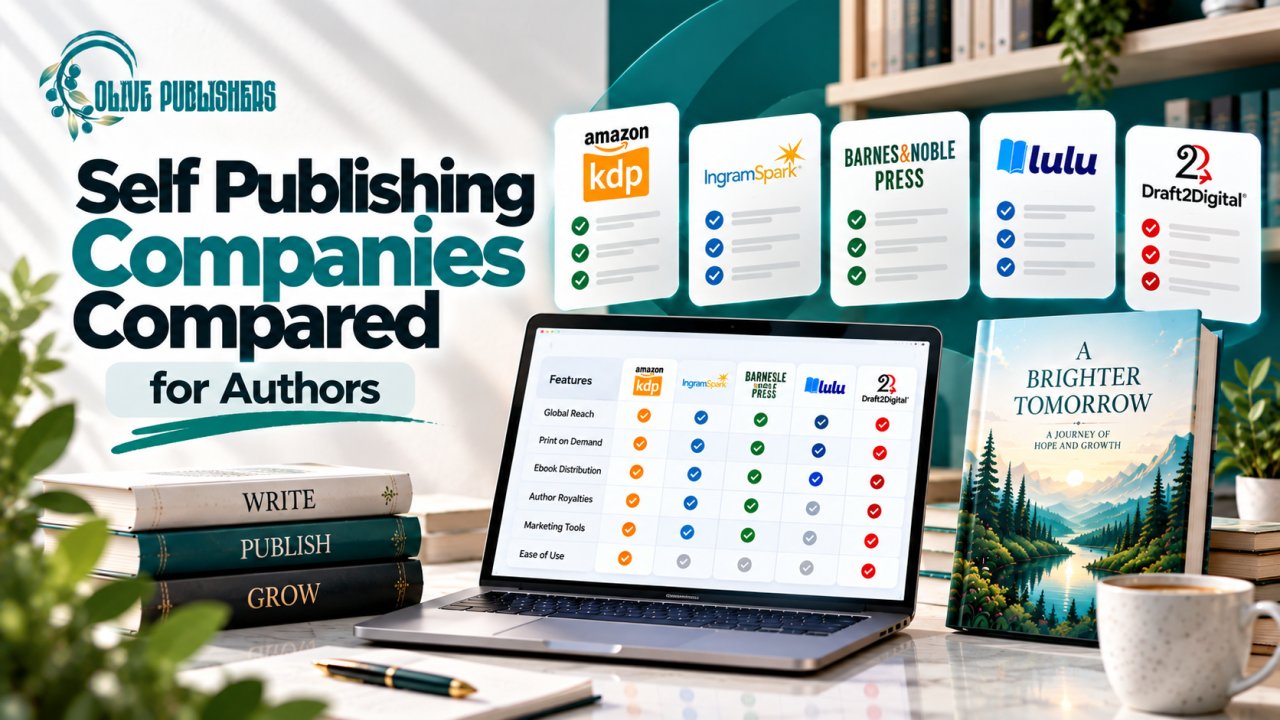
Publishing platforms fall into two kinds. Retailer platforms such as Amazon KDP, Kobo Writing Life and Apple Books sell directly to readers. Distributors and printers such as IngramSpark and Draft2Digital push your book out to many stores and libraries. Many authors use KDP for Amazon and a second service for wider reach. Choose based on where your readers shop. Read each platform's terms on exclusivity before you commit.
Step 6 Set Your Price, Description and Keywords
Your price sets your royalty. Amazon pays 70% on Kindle ebooks priced inside its qualifying price band and 35% outside it. Amazon has changed that band before, so check the current limits on the KDP help page. For paperbacks, KDP pays a percentage of the list price minus the printing cost. For illustration only, a $14.99 paperback at a 60% rate with a $4.00 printing cost earns about $4.99 per copy.
Then write a description that opens with the reader's problem or the story's hook. Choose categories and keywords that real readers search for.
Step 7 Order a Proof Copy
A printed proof shows what a screen hides. Check how the cover colors look on paper, whether text sits too close to the spine and whether page breaks land in awkward places. Read the whole book once more in print. Fix what you find and reorder until you are happy.
Step 8 Publish and Set Up Your Book Pages
Submit your files and wait for the platform to review them. While you wait, complete your author page and add extra description content such as Amazon A+ Content where it is offered. Make sure your ebook and print editions appear together on one product page. An ebook preorder gives you a fixed date to build excitement around.
Step 9 Launch and Keep Marketing
Publishing is not the finish line. Plan a launch with early reviews, an email list and a small ad budget, then keep promoting after launch week. The marketing section below shows how.
Cost to Self Publish a Book
The cost to self publish a book ranges from almost nothing to several thousand dollars, depending on how much you do yourself and how much you hire out. Publishing platforms are free to join. The real spending goes to the services that make a book competitive. Use this table to plan.
|
Cost item |
Lower cost route |
Professional route |
What to know |
|
Editing |
Beta readers and editing software |
Freelance or agency editor |
Price depends on word count and edit type, so ask for a sample edit |
|
Cover design |
Premade cover templates |
Custom cover from a book designer |
Print covers need a spine and back cover sized to your page count |
|
Interior formatting |
Word or Google Docs template |
Professional formatter |
Ebook and print need separate files |
|
ISBN |
Free platform ISBN |
Bowker ISBN at $125 single or $295 for ten |
Free ISBNs tie your book to that platform |
|
Copyright registration |
Skip it, since copyright still exists |
$45 or $65 with the US Copyright Office |
Registration helps if you must enforce your rights |
|
Printing |
Print on demand, paid per copy sold |
Short offset run for events |
Print on demand has no upfront stock cost |
|
Marketing |
Email list and organic social media |
Managed ads, reviews and publicity |
Set a marketing budget before launch |
The smartest order of spending is editing first, cover second and marketing third. A polished book that nobody hears about sells poorly. A rough book with a large ad budget loses readers quickly. You need both halves, so spread your budget across them.
Best Ways to Self Publish a Book Compared
The best ways to self publish a book fall into four routes. The right one depends on your budget, your comfort with technology and the time you can give.
|
Route |
Best for |
What you handle |
Watch out for |
|
Direct upload to a retailer platform |
Authors on a tight budget who like learning tools |
Everything including files, cover and promotion |
It is easy to publish an unpolished book |
|
Ebook distributor plus print on demand printer |
Authors who want wide store and library reach |
Files, metadata and each platform account |
Juggling several dashboards and payouts |
|
Self publishing company or package |
Authors who want a bundle at a set price |
Approving each stage |
Unclear contracts and ISBN ownership |
|
Full service publishing partner |
Busy authors who want professionals at every stage |
Final decisions and promotion approval |
Higher cost, so compare scopes carefully |
Direct uploading keeps cash costs lowest. Packages and partners save time and cut the number of mistakes. Neither route is better in itself. What matters is that you keep ownership of your files, your ISBN and your rights, whichever route you take.
How to Choose Self Publishing Companies and Packages
Self publishing companies range from honest production studios to vanity presses that earn their money from authors rather than readers. Whether you use a self publishing website to upload on your own or hire a company for self publishing services, the same checks apply.
Watch for these warning signs in any company or package.
• The company supplies the ISBN and lists itself as publisher of record, so your imprint never appears in book databases.
• The contract takes exclusive or long term rights to your book.
• The package promises guaranteed sales, rankings or a bestseller.
• Pricing is vague, or add ons appear after you sign.
• There are no samples, no named team and no clear turnaround times.
Ask every provider these questions before you pay.
• Who owns the final files and the ISBN?
• If I end the contract, what happens to my book?
• What exactly does each package include and leave out?
• Who answers my emails and how fast?
• Can I see sample work in my genre?
Self publishing packages suit authors who want one price and one point of contact. Pay close attention to what sits outside the package, such as extra edits, revisions or ad budgets. Self publishing assistance is worth buying when it removes a task you would do slowly or badly, such as formatting or ad setup. It is a poor buy when it only repeats something free that you can learn in an hour.
Self Publishing Marketing for First Time Authors
Self publishing marketing works best when you treat it as one plan with three goals. Awareness gets your book seen. Engagement turns viewers into followers, subscribers and reviewers. Sales happen when enough warm readers meet a clear offer. Every tactic below serves one of those goals, so ask which one before you spend time or money.
Build an Email List With a Lead Magnet
An email list is the one audience you own. Offer a lead magnet, such as a free short story, a checklist or the first chapter, in exchange for an email address. A widely quoted Litmus benchmark puts average email marketing return at $36 for every $1 spent. That figure comes from businesses in general and not from books specifically, but it shows why list building earns a place in your plan. Readers who join your list tend to buy, review and share more than cold audiences do.
Earn Early Reviews and PR Outreach
Early reviews and PR outreach build trust before launch day. Send advance copies to book bloggers in your genre, apply for NetGalley or a Goodreads giveaway where it fits. Consider a professional review service such as Kirkus. Goodreads has more than 150 million members, so setting up your author profile there is worth the hour. Never pay for reviews or trade copies for promised five star ratings, because Amazon can remove them.
Use Amazon Marketing the Right Way
Amazon marketing starts with the book page itself. Choose two precise categories, write a description that sells and fill every keyword slot KDP gives you. After that, test Amazon Ads with a small daily budget aimed at comparable authors and genre keywords. Check ACOS often, because it tells you whether the ads pay for themselves.
Social Media and Influencer Marketing
Social media marketing and influencer marketing work when the content is made for readers and not only for ads. Pick one or two platforms where your genre readers gather, such as short video for fiction fans or professional networks for business books. Offer influencers a free copy with clear expectations. Disclose partnerships honestly. Quotes, behind the scenes clips and chapter teasers keep engagement alive between launches.
Meta Ads for Books
Meta Ads put your book in front of readers on Facebook and Instagram based on interests and lookalike audiences. They suit authors who already have a tested cover, a strong description and a landing page. Start small. Test two or three images against one audience at a time and stop any ad that does not earn its keep.
Content Marketing and Search Engine Optimization
Content marketing and search engine optimization bring slow but steady discovery. A simple author website with a blog that answers questions your readers search for can attract organic visitors for years. Add a signup form to every page so those visitors join your email list.
Plan Book Launch Marketing and Post Launch Backlist Marketing
Book launch marketing covers the weeks around release day, including advance reviews, preorders, email announcements and a first round of ads. Post launch marketing keeps going after that, with price promotions, fresh ad creative and podcast or press pitches. Backlist marketing points new readers to your earlier titles whenever you release another book, which is one reason a series or a group of related books builds momentum.
If you would rather hand this plan to a team, professional book marketing services can run reviews, ads and email campaigns while you write the next book.
Self Publishing Business Basics
A self publishing business begins when you treat your book as a product with costs, income and a customer. Choose an imprint name for your books instead of publishing only under your own name. Own your ISBNs, keep a copy of every file and track expenses and royalties in one sheet. Reinvest early income in better covers, ads and your next title.
The market supports that effort. At outlets that report to Circana BookScan, US print book sales reached 762.4 million units in 2025. Readers are still buying books in large numbers. Your job is to make sure the right ones can find yours.
What to Track After You Self Publish Your Book
After you self publish your book, track a small set of numbers each week so you know what to fix. Do not watch sales alone, because sales are the result and not the cause.
|
Metric |
What it tells you |
Healthy habit |
|
Amazon Best Sellers Rank (BSR) |
How your sales compare with other books right now |
Watch the trend over weeks, because it moves hourly |
|
Click through rate (CTR) |
Whether an ad or email earns clicks |
Test a new cover or headline if CTR stays low |
|
Advertising cost of sale (ACOS) |
Ad spend divided by ad sales |
Compare it with your royalty percentage |
|
Conversion rate |
How many page visitors buy |
Improve the cover, description and reviews |
|
Email open rate |
Whether your sender name and subject lines work |
Treat it as a rough guide, since some mail apps inflate opens |
|
Subscriber growth |
Whether your lead magnet attracts readers |
Track new signups per week |
|
Review count and rating |
Social proof on your book page |
Aim for steady growth and not a single spike |
|
Read through |
How many readers buy your next book |
Strong read through justifies more ad spend on book one |
Here is a rule that saves many authors money. Your break even ACOS equals your royalty as a percentage of the book's price. If you earn 35% of the price on each sale, an ACOS above 35% loses money on that sale. It may still be worth it if those readers go on to buy your later books, but you should make that choice on purpose.
Who Self Publishing Is Best For and Who Should Wait
Self publishing is best for authors who want control and are willing to treat the book like a project with a budget.
It is a strong fit when most of these statements describe you.
• You want to decide the cover, title, price and release date yourself.
• You have a finished manuscript or a firm writing schedule.
• You can set aside money for editing, design and marketing.
• You are comfortable talking to readers online, or you will hire help to do it.
• You plan to publish a series or several books over time.
It is probably not the right fit yet when these statements sound more like you.
• You want a large advance and national bookstore placement without doing marketing.
• You plan to publish an unedited draft and expect strong sales.
• You are looking for guaranteed results, even though no publishing route can promise them.
• You have no time or budget for any promotion.
If that second list sounds like you, keep refining the manuscript or keep querying agents until the book and your plan are ready.
Start Here If You Are a First Time Author
First time authors tend to repeat the same mistakes. Most are cheap to avoid.
• Skipping a real edit
• Choosing a cover that ignores the genre
• Picking weak categories and keywords
• Buying an ISBN from a random reseller
• Launching with no email list
• Stopping all marketing after launch week
A simple six month plan keeps you moving. Treat it as a planning guide and not a rule.
|
Month |
Focus |
|
Month 1 |
Finish edits and settle your title and cover direction |
|
Month 2 |
Complete the cover, formatting and ISBN setup |
|
Month 3 |
Order proofs, set up book pages and start your email list |
|
Month 4 |
Gather advance reviews and prepare launch content |
|
Month 5 |
Launch with preorders, ads and email announcements |
|
Month 6 |
Review the numbers, adjust ads and plan book two |
Self Publishing Help From Olive Publishers
Self publishing help from Olive Publishers covers the stages that first time authors usually find hardest. Olive Publishers is a book publishing and book marketing company that works with first time and self published authors, from editing and cover design through formatting, publishing and promotion. You can see the full range of self publishing services on the Olive Publishers website.
Paying for help is a fair worry, so here are honest answers to the three objections authors raise most.
• Will I lose control of my book? A good partner shows you where ownership of your files, rights and ISBN sits before you sign. Ask Olive Publishers for those terms in writing, just as you would with any provider.
• Can anyone promise sales? No. No publisher, agency or platform can guarantee sales, rankings or a bestseller. Olive Publishers does not promise them either. A team can raise quality, reduce mistakes and keep promotion consistent.
• Is it cheaper to do everything myself? Sometimes in cash, but rarely in time. Compare the price of a service with the hours it would cost you and the risk of expensive errors.
Ready to Self Publish Your Book?
Ready to self publish your book with a plan instead of guesswork? Start with the steps in this guide. Set a budget for editing, design and marketing. Then pick the route that fits your time. If you want experienced help at any stage, contact Olive Publishers through the website and tell the team about your book, your goals and your timeline. They can map out what your project needs.
Frequently Asked Questions
How much does it cost to self publish a book?
The cost to self publish a book ranges from almost nothing for a do it yourself ebook to several thousand dollars once you add editing, cover design, formatting and marketing. An ISBN costs $125 from Bowker, or $295 for ten. Editing and cover design usually take the largest share of a quality budget.
Can you self publish a book for free?
You can self publish a book for free on platforms such as Amazon KDP, which charge no setup fee and take a share of each sale. The catch is your time and the quality risk, because editing, design and promotion still need to be done by you or by someone you pay.
How does self publishing work on Amazon?
Self publishing on Amazon works through Kindle Direct Publishing. You create an account, upload your manuscript and cover, set your price and choose categories and keywords. Amazon reviews the files, lists the book and pays royalties after each sale, with print copies produced on demand.
Is self publishing worth it?
Self publishing is worth it when you want control and will invest in quality and promotion. It is a poor fit if you expect fast income without marketing. Millions of authors publish each year, so your results depend on how well your book is edited, designed and promoted.
How long does it take to self publish a book?
Self publishing a book takes about 3 to 6 months from a finished draft for most first time authors, depending on editing rounds, cover design and launch planning. The upload itself takes a day or two, but a careful process produces a stronger book.
Do I need an ISBN to self publish a book?
To self publish a book in print, you need an ISBN, since retailers and libraries use it to identify editions. Amazon KDP offers a free one, but buying your own from Bowker lists you or your imprint as publisher of record. Each format, such as paperback, hardcover and ebook, needs a separate number.
How do I self publish a cookbook or a hardcover book?
To self publish a cookbook or a hardcover book, choose a printer that offers the format you need and design to its trim sizes. Cookbooks need careful layout for recipes and photos. Hardcovers cost more to print. Check page limits and printing costs before you design, since they affect royalties.
Where can I self publish my book?
You can self publish your book on retailer platforms such as Amazon KDP, Kobo Writing Life and Apple Books, or through distributors and printers such as IngramSpark and Draft2Digital. Choose by where your readers shop and which formats you need. Many authors combine two services.