On this page (34)
- Compare the main options
- What you receive
- Best question to ask
- Strategy consultation
- Campaign execution
- Advertising management
- Outreach service
- Author platform support
- What Facebook ads can and cannot do
- Prepare before opening Ads Manager
- Choose a clear angle
- Create variations for testing
- Audience selection and targeting
- Budget and campaign duration
- Landing pages and retailer links
- Measure beyond clicks
- Common mistakes authors make
- Policy and ethical considerations
- When to hire a specialist
- Olive Publishers and campaign planning
- Build a creative brief
- Keep a test log
- A practical decision checklist
- Reliable guidance authors should know
- Conclusion
- Frequently Asked Questions
- What does Facebook ads for authors mean?
- How much should an author budget?
- When should I start?
- How do I know whether the service is working?
- Can a provider guarantee sales or reviews?
- Should I do marketing myself?
- What should a contract include?
- How can Olive Publishers help?
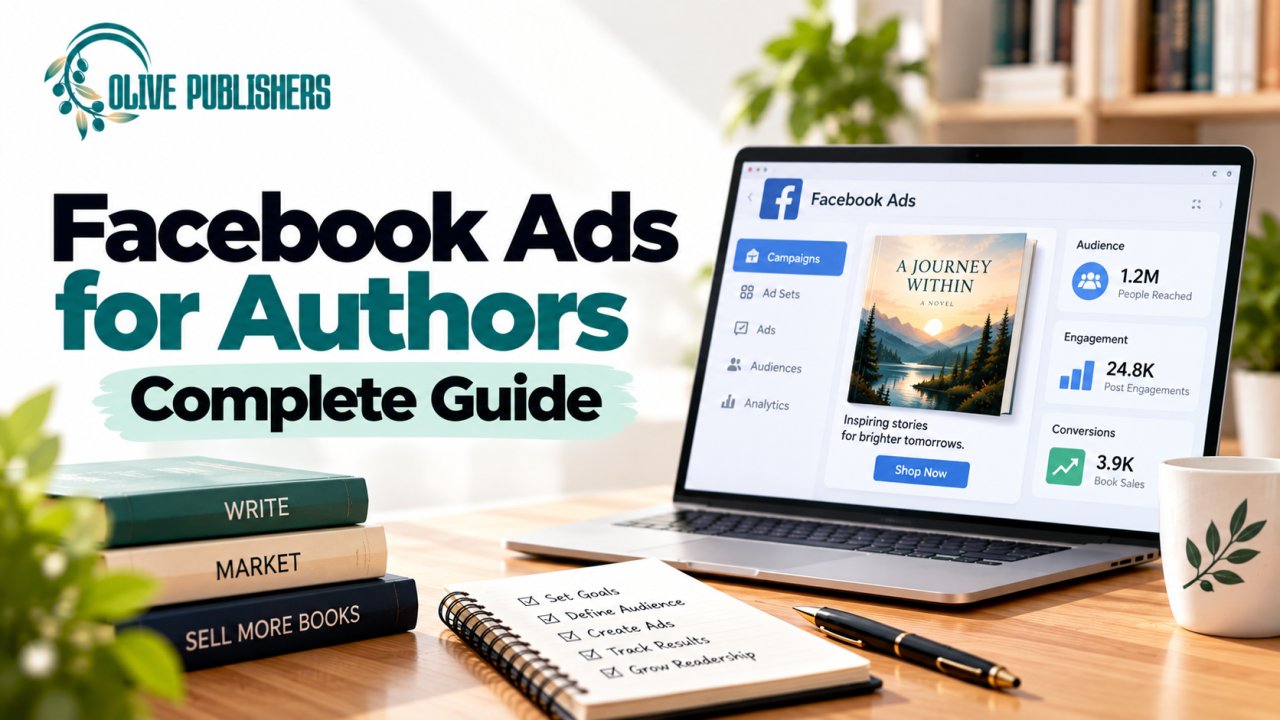
Facebook ads for authors can introduce a book to readers based on creative, audience, and campaign signals, but paid reach does not guarantee purchases. A successful test begins with a clear reader profile, an effective image or video, and a destination page that explains the book. Authors should treat early campaigns as learning opportunities, set a budget they can afford to test, and avoid assuming that clicks alone prove commercial success.
Quick answer: Facebook ads for authors work best when the author chooses services that match the book’s readers, sets a clear goal, and tracks meaningful outcomes. Compare written deliverables, total cost, audience fit, ethical practices, and reporting before committing.
Need help identifying the right next step for your book? Explore Olive Publishers’ contact page to discuss your goals and the support you may need.
Compare the main options
|
Support type |
What you receive
|
Best question to ask
|
Strategy consultation
|
Advice and prioritized next steps |
Will I receive written recommendations? |
Campaign execution
|
Work carried out on agreed channels |
Which deliverables are included and when? |
Advertising management
|
Setup, monitoring, and optimization |
Is media spend separate from the management fee? |
Outreach service
|
Research and pitches to relevant contacts |
How is relevance assessed and what is guaranteed? |
Author platform support
|
Website or profile improvements |
Who owns the accounts, files, and data? |
What Facebook ads can and cannot do
Facebook ads can help authors show book-related creative to selected audiences and test messages. They do not guarantee that people will buy, finish, or recommend a book. Results depend on the offer, creative, audience, placement, landing page, competition, and campaign setup. Treat advertising as a controlled experiment, not a promise of instant sales.
For authors, the practical test is whether this activity fits the book’s audience and supports the next step a reader is likely to take. Keep the decision connected to the goal, record what is included, and revisit the choice when the evidence or the book’s stage changes. This keeps Facebook ads for authors focused on reader value rather than activity for its own sake.
Prepare before opening Ads Manager
Write a short reader profile and define one campaign goal. Decide whether you want retailer visits, website traffic, email signups, event registrations, or another measurable action. Check that the destination page is complete, mobile-friendly, and consistent with the ad. Prepare a small set of creative options and ensure you have rights to the images, text, and music used.
Choose a clear angle
An ad needs a specific reason to stop scrolling. Fiction angles may focus on genre, a central dilemma, a distinctive setting, or a reader-familiar trope. Nonfiction angles may explain the question the book answers or the experience it helps readers explore. Avoid cramming the entire plot or table of contents into the creative. One message is easier to understand and test.
For authors, the practical test is whether this activity fits the book’s audience and supports the next step a reader is likely to take. Keep the decision connected to the goal, record what is included, and revisit the choice when the evidence or the book’s stage changes. This keeps Facebook ads for authors focused on reader value rather than activity for its own sake.
Create variations for testing
Test meaningful differences, such as a cover-led image against a short video or one hook against another. Keep other variables reasonably consistent so the comparison teaches you something. Ensure text is readable on a phone and the book title remains clear. Do not use misleading claims, fake social proof, or creative that implies a result the book cannot promise.
Audience selection and targeting
Audience tools and options change over time, so use the current Meta Ads Manager interface and policy guidance. Begin with a sensible hypothesis about who may enjoy the book, but do not assume interest labels perfectly describe buying intent. Creative itself can help qualify the audience. Monitor the quality of visits and take care not to overinterpret results from a small sample.
Budget and campaign duration
Choose a test amount you can afford to lose as part of learning. Avoid making repeated changes before enough data has accumulated to offer a useful signal. There is no universal daily budget that works for every book. Cost varies by market, audience, season, creative, and objective. Agree on a stopping rule before the campaign starts.
Landing pages and retailer links
If the ad sends readers to a retailer, make sure the product page has a strong description, accurate categories, suitable cover, and useful sample. If you send traffic to your own website, make the next step obvious. Use tracking parameters where appropriate and respect privacy requirements. Keep the route from ad to purchase simple.
Measure beyond clicks
Track the goal selected for the campaign, not just cheap clicks. Website analytics, retailer reporting, email signups, and sales data may each provide part of the picture. Some readers will see an ad and purchase later or through another device, so attribution may be incomplete. Document the limits of the data and compare results over time.
Common mistakes authors make
Frequent mistakes include changing several variables at once, promoting before the book page is ready, using generic creative, targeting too broadly, and increasing spend without reviewing results. Another mistake is assuming that likes and comments are the same as purchases. Decide what success means before launch and keep the campaign aligned with that goal.
Policy and ethical considerations
Follow Meta’s current advertising standards and any applicable rules for endorsements, privacy, and consumer claims. Use images and music you have permission to use. Never buy fake reviews or invent testimonials. The FTC’s rule on consumer reviews and testimonials prohibits specified deceptive practices, including certain fake reviews and incentives conditioned on review sentiment.
When to hire a specialist
Professional help may be useful when campaign setup, tracking, creative testing, or ongoing optimization is beyond your available time. Ask for a clear scope, account ownership, budget controls, reporting, and the fee arrangement. Keep access to your own advertising account and avoid giving unnecessary permissions.
Olive Publishers and campaign planning
Olive Publishers provides book marketing and Amazon marketing services that may fit into a wider launch plan. If you want help, clarify whether the need is campaign strategy, creative support, or broader marketing coordination. Visit book marketing services or contact Olive Publishers to discuss the project.
Build a creative brief
Before making ads, write a one-page brief: audience, problem or interest, key message, format, destination, and desired action. The brief keeps creative work aligned and makes it easier to judge results. Ask whether a reader can understand the book’s appeal in a few seconds. Keep the cover legible and avoid overloading an image with text.
Keep a test log
Record the campaign objective, creative version, audience hypothesis, dates, spend, clicks, and available downstream results. Add a short note about what changed. This record helps prevent the same weak idea from being repeated and protects against decisions based on memory. It also gives a consultant or agency a clearer starting point if you later outsource campaign management.
A practical decision checklist
Before paying for any service, answer these questions:
· Who is the intended reader, and why is this book relevant to them?
· What single outcome should the next campaign or service support?
· What exact deliverables will be provided, by whom, and by when?
· Which fees are included, and which media or third-party costs are separate?
· How will progress be reported, and what data limitations should be expected?
· Who owns the accounts, audience data, and creative files?
· What are the cancellation terms and the plan if the work needs to change?
Reliable guidance authors should know
Amazon Ads guidance: Amazon Ads’ official guidance explains that Sponsored Products can appear in shopping results and product detail pages, and that eligible advertisers control bids or budgets and pay per click. Availability and eligibility vary, so authors should check current account guidance before launch.
Google Search guidance: Google Search Central recommends helpful, reliable, people-first content and warns against producing pages mainly to manipulate search rankings. Search optimization should make useful content easier to discover, not replace original value or reader clarity.
FTC review guidance: The Federal Trade Commission’s rule on consumer reviews and testimonials addresses specified deceptive practices, including certain fake reviews and incentives conditioned on positive or negative sentiment. Authors should seek honest feedback and follow the current policies of each platform.
These notes are general guidance, not a substitute for checking the current rules of the platform or provider relevant to your campaign.
Conclusion
The most useful approach to Facebook ads for authors is specific, measurable, and realistic. Define the reader, prepare the book’s presentation, compare providers by written scope, and choose channels that fit the way your audience discovers books. Start with a manageable plan, track both completed work and meaningful response, and adjust based on what you learn. Avoid promises that cannot be supported and keep control of your author assets.
Frequently Asked Questions
What does Facebook ads for authors mean?
Facebook ads for authors refers to professional support that helps authors connect their books with suitable readers. The exact scope depends on the provider. Review the deliverables, intended audience, timeline, fees, and reporting rather than relying on the service label alone.
How much should an author budget?
There is no single budget that fits every book. Costs depend on the channel, duration, creative work, provider, and whether advertising spend is included. Start with a ceiling you can afford, prioritize essential improvements, and request an itemized quote before committing.
When should I start?
Start by preparing the book’s positioning, description, links, and author presence. For a launch, allow time for advance outreach and creative production. For an already published book, begin with an audit and choose a realistic next step based on the book’s current status.
How do I know whether the service is working?
Define the goal before work begins and agree on relevant measures. These may include completed deliverables, relevant responses, website visits, email signups, ad clicks, or sales data where available. Interpret results in context because no single metric captures every reader interaction.
Can a provider guarantee sales or reviews?
Be cautious of guarantees about sales, bestseller status, or positive reviews. A provider can commit to specific work, but reader behavior is not fully under its control. Fake reviews and incentives conditioned on sentiment create ethical and regulatory concerns.
Should I do marketing myself?
DIY marketing can work when the scope is manageable and you have time to learn. Professional help can be useful for tasks that need specialist knowledge or consistent execution. Many authors use a hybrid approach, handling routine content while outsourcing selected tasks.
What should a contract include?
Confirm services, deliverables, deadlines, fees, ad spend, revision limits, account ownership, reporting, cancellation terms, and the process for scope changes. Keep important promises in writing. For significant commitments or unclear terms, consider independent professional advice.
How can Olive Publishers help?
Olive Publishers offers book marketing and related author services. The useful starting point is to explain your book, audience, stage, goals, and budget, then ask which services fit the need. Review the current service details and confirm scope directly before making a decision.