On this page (30)
- Quick Answer
- Table of Contents
- Paperback vs Hardcover at a Glance
- Which Format Sells Better in 2026
- What the Data Cannot Tell You
- Paperback vs Hardcover Printing Cost and Royalties
- Worked Example for a 300 Page Book
- How to Price a Paperback and a Hardcover
- Paperback or Hardcover by Genre
- Paperback vs Hardcover for First Time Authors
- Print on Demand vs Bulk Printing for Each Format
- Should You Release Paperback and Hardcover Together
- Where Ebooks and Audiobooks Fit Beside Paperback vs Hardcover
- How to Test Paperback vs Hardcover Demand Before You Print
- KPIs to Track After Launch
- Who This Guide Is For and Who It Is Not For
- This guide is for
- This guide is not for
- Common Paperback vs Hardcover Mistakes
- How Olive Publishers Can Help
- Frequently Asked Questions
- Do Paperbacks or Hardcovers Sell More?
- Is Hardcover More Profitable Than Paperback?
- Should I Publish Paperback or Hardcover First?
- Are Hardcover Books Worth It for Self Published Authors?
- How Much Does It Cost to Print a Hardcover vs a Paperback?
- Can I Publish a Paperback and a Hardcover of the Same Book?
- Why Are Hardcover Books More Expensive Than Paperbacks?
- Do Readers Still Buy Print Books in 2026?
- Conclusion
Paperback vs hardcover is one of the first choices an author makes about a book. The format you pick shapes your price, your profit per copy and the way readers see your work. This guide compares both formats using the latest US industry data, real printing costs and practical advice so you can choose with confidence instead of guessing. You will see which format tends to sell better in each situation, what each one really earns you and when it makes sense to offer both.
Quick Answer
- Paperback suits price sensitive readers and most fiction.
- Hardcover suits gifts, memoirs, illustrated books and premium positioning.
- A 300 page hardcover costs about $9.25 to print on KDP against roughly $4.60 for a paperback.
- Most debut authors can start with a paperback and add a hardcover once demand is proven.
Table of Contents
- Paperback vs Hardcover at a Glance
- Which Format Sells Better in 2026
- Paperback vs Hardcover Printing Cost and Royalties
- How to Price a Paperback and a Hardcover
- Paperback or Hardcover by Genre
- Paperback vs Hardcover for First Time Authors
- Print on Demand vs Bulk Printing for Each Format
- Should You Release Paperback and Hardcover Together
- Where Ebooks and Audiobooks Fit Beside Paperback vs Hardcover
- How to Test Paperback vs Hardcover Demand Before You Print
- KPIs to Track After Launch
- Who This Guide Is For and Who It Is Not For
- Common Paperback vs Hardcover Mistakes
- How Olive Publishers Can Help
- Frequently Asked Questions
- Conclusion
Paperback vs Hardcover at a Glance
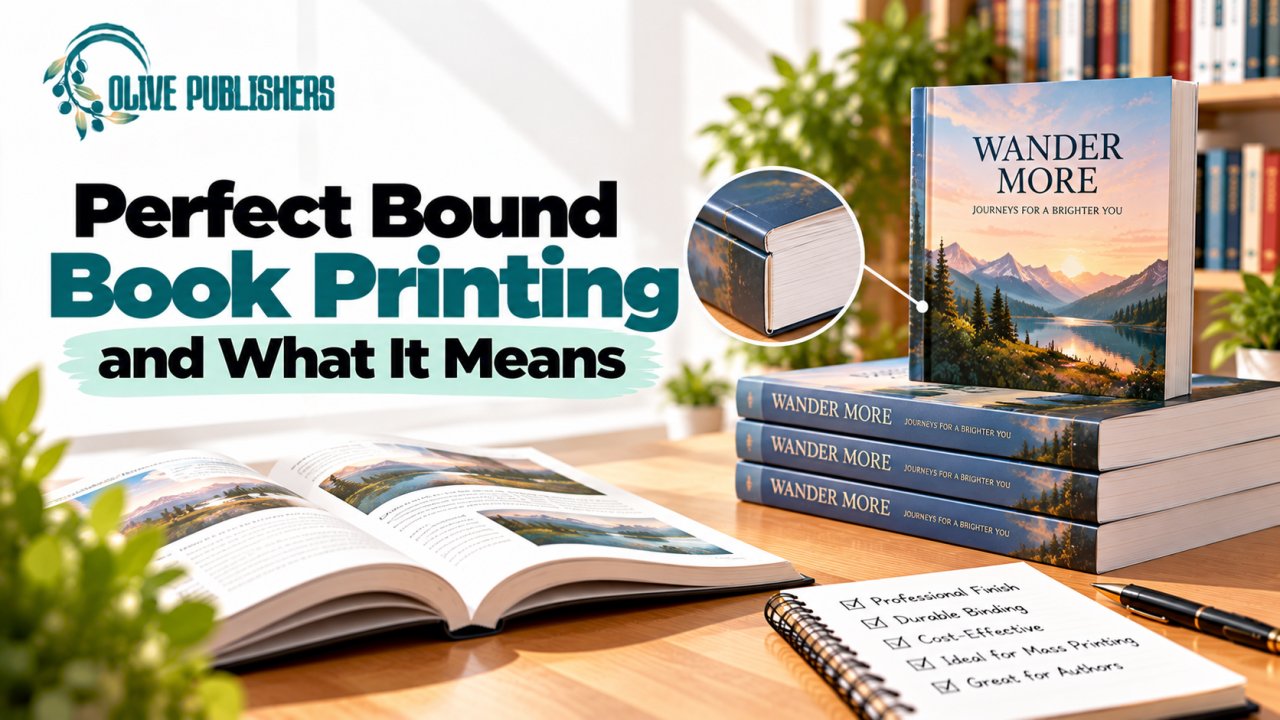
Paperback vs hardcover comes down to binding, cost and perception. A paperback uses a flexible paper cover and is lighter and cheaper to print. A hardcover uses rigid boards, often with a dust jacket or printed case, which makes it sturdier and more expensive. Neither format wins every category, so the right pick depends on your book and your readers.
|
Factor |
Paperback |
Hardcover |
|---|---|---|
|
Print cost for 300 pages on KDP |
About $4.60 |
About $9.25 |
|
List price |
Lower |
Higher |
|
Portability |
Light and easy to carry |
Heavier and bulkier |
|
Durability |
Moderate |
High |
|
Page range on KDP |
From 24 pages |
75 to 550 pages |
|
Best for |
Fiction, workbooks and debut authors |
Memoirs, gift books, illustrated titles and speaker events |
|
Main risk |
May feel less premium to gift buyers |
Higher price can slow sales |
Readers bring expectations to every format. Many genre fiction readers want a manageable price and a book they can carry. Gift buyers often respond to a rigid cover, color artwork or a special edition finish. A business author who sells books after speaking events may prefer a hardcover for its presentation, while a workbook author may care more about usability and cost. Treat these as general patterns, because exact costs vary by printer, paper, trim size and finish.
Which Format Sells Better in 2026
Which format sells better depends on the book, yet the latest US data gives useful context. The Association of American Publishers reports that US publishing revenue reached an estimated $33.4 billion in 2025, up 2.5% from 2024. Within trade books, hardcover revenue grew 3.9% to about $8.0 billion while paperback revenue grew 2.0% to about $7.8 billion. Print formats generated 73.1% of trade revenue. Digital formats made up 21.5%.
Unit sales tell a similar story of stability. Circana BookScan recorded 762.4 million print units sold in 2025, a 0.3% increase over 2024. Reader behavior supports this. A Pew Research Center survey from October 2025 found that 64% of US adults had read a print book in the past 12 months, compared with 31% for ebooks and 26% for audiobooks. Print is still the only format that a majority of Americans use.
What the Data Cannot Tell You
These figures describe the whole market, not your book. Hardcover leading on revenue does not mean it sells more copies, because every hardcover carries a higher price. Most bestselling titles also come from large publishers, so the numbers say little about how an independent title will perform. Use market data for context, then compare books with a similar genre, price and audience before you decide.
Paperback vs Hardcover Printing Cost and Royalties
Paperback vs hardcover printing cost is the number that changes your profit the most. Amazon Kindle Direct Publishing (KDP) pays 60% of the list price minus the printing cost on Amazon.com sales. Expanded distribution pays 40% instead. For a 300 page black ink book, KDP help pages show a printing cost of about $4.60 for a paperback and $9.25 for a hardcover. Rates change over time, so confirm yours in the KDP royalty calculator before you set a price.
Worked Example for a 300 Page Book
The table below uses the 60% rate on Amazon.com.
|
Format |
List price |
Printing cost |
Royalty per copy |
|---|---|---|---|
|
Paperback |
$14.99 |
$4.60 |
$4.39 |
|
Hardcover |
$19.99 |
$9.25 |
$2.74 |
|
Hardcover |
$24.99 |
$9.25 |
$5.74 |
|
Hardcover |
$29.99 |
$9.25 |
$8.74 |
The pattern is clear. A hardcover priced at $19.99 earns $1.65 less per copy than a $14.99 paperback. The hardcover needs a list price of about $22.75 to match the paperback royalty. If your readers will not pay that much, the paperback is the stronger earner even though it looks less premium.
KDP also sets a minimum list price by dividing the printing cost by the royalty rate. For this hardcover that works out to about $15.42. Other print platforms use different cost and wholesale discount structures, so compare net proceeds for each format rather than cover prices. A hardcover that earns more per copy can still produce less total income if most readers prefer the paperback.
How to Price a Paperback and a Hardcover
Paperback and hardcover pricing starts with the market, not with your printing bill. Look at five or more comparable titles and note where their paperbacks sit on price. Set your paperback inside that range, then check that the royalty per copy is positive after printing cost and retailer deductions.
Price the hardcover only after that. It must clear the minimum list price that KDP calculates. It should leave a margin that justifies the extra production work. A hardcover priced only a few dollars above the paperback gives buyers little reason to pay more, while a very high price can push gift buyers toward the cheaper edition.
Revisit your prices after the first 60 to 90 days. If sales are slow, test a lower paperback price before you cut the hardcover. If the hardcover sells steadily, you have evidence that presentation matters to your readers.
Paperback or Hardcover by Genre
Paperback or hardcover choices vary by genre because readers in each category buy for different reasons. Circana BookScan data for 2025 shows how unevenly print demand moved.
- Romance print sales rose 3.9% to almost 44 million units.
- Fantasy sales fell 8.7% to 24.1 million units.
- Suspense and thriller sales fell 2.2% to 25.5 million units.
- Self help sales grew 14.7% while religion grew 5.4% to nearly 67 million units.
- Biographies and memoirs fell 7% while business and economics books fell 3.9%.
- Children's nonfiction rose 3.6%.
Fiction readers who buy several books a year often prefer a lower priced paperback, which fits romance, thriller and fantasy. Memoirs, business books and gift titles can justify a hardcover because presentation matters to the buyer, although the 2025 declines in those categories make careful pricing even more important. Illustrated nonfiction, cookbooks and photography books often need a hardcover to show off their pages, but color printing raises the cost sharply, so request quotes before you commit. Children's books depend on age group and design. Board books and picture books need sturdier construction than chapter books.
Paperback vs Hardcover for First Time Authors
Paperback vs hardcover for first time authors is mostly a question of risk. A debut author has little proof of reader demand, so a lower priced paperback makes the book easier to try. It also keeps production simpler, because you manage one cover file, one set of proofs and one listing.
Consider a debut novelist with a small audience. A paperback keeps the price friendly while reviews build. Once orders and reader comments show real interest, a hardcover can be added for gift buyers and special editions. Keep your cover, metadata and edition details organized so the later release does not create confusion.
A different author may speak to professional groups and sell books after every session. A hardcover may suit that setting, while an inexpensive paperback may be easier to include in a workshop bundle. Follow the buying situation rather than a belief that one format is more prestigious.
Three starting points help most beginners.
- Choose paperback when your readers are price sensitive.
- Choose hardcover only when presentation is part of the sale.
- Keep your source files organized so a second edition is easy to prepare.
Print on Demand vs Bulk Printing for Each Format
Print on demand lets a platform print a copy only after an order arrives, so you do not need to hold stock. Bulk printing can lower the cost per copy at higher volume, but it needs cash upfront, storage space and a plan for fulfillment.
- Print on demand suits first books, uncertain demand and hardcovers, because each hardcover costs about twice as much to print as a paperback.
- Bulk printing suits confirmed event orders, workshop bundles and titles with proven demand.
- KDP prints hardcovers from 75 to 550 pages, so very short or very long books may need another printer.
The right route depends on how sure you are about demand, how many copies you can realistically sell and how quickly events need stock. Authors can order copies at printing cost plus shipping through KDP, which helps when a hardcover is needed for a signing or talk.
Should You Release Paperback and Hardcover Together
Paperback and hardcover editions released together can serve different budgets, but the choice doubles your production work. Each format needs its own cover file with the correct spine width, its own proof check and its own listing details. Each edition also generally needs its own ISBN, so read how to get an ISBN before you upload files.
Some authors launch one format first, learn from early reader response and add the other later. If you release both, keep the title, author name and description consistent so readers can tell the editions apart. Explain what each one offers, such as durability or lighter weight, without claiming that either format is better.
A single well prepared edition is better than two editions with technical errors or unclear listings. Add the second format when reader demand and the numbers support it.
Where Ebooks and Audiobooks Fit Beside Paperback vs Hardcover
Paperback vs hardcover is only part of your format plan, because many readers also buy digital formats. In 2025 digital formats made up 21.5% of US trade revenue. Trade audiobook revenue rose 5.3% while ebook revenue rose 3.0%, according to the AAP. Pew found that 31% of US adults read an ebook and 26% listened to an audiobook in the past 12 months.
Think of your formats as a price ladder. An ebook offers the lowest entry price. A paperback serves most readers. A hardcover serves gift buyers and collectors. An audiobook reaches people who listen while they commute or exercise. You do not need every rung on day one. Start with the formats your readers ask for and add the rest as sales prove the demand.
How to Test Paperback vs Hardcover Demand Before You Print
Paperback vs hardcover demand testing starts with the audience you already reach. Ask newsletter subscribers, event attendees, book club members or followers which format they would realistically buy and at what price. Treat answers as direction rather than promises, because people may say they prefer a hardcover and still buy the cheaper paperback. Preorders and confirmed bulk orders are much stronger evidence than opinions.
Study comparable books as well. Pick several titles with a similar genre, audience, length and author profile. Record each format offered, the list price, cover style and any reader comments about price or usability. Avoid comparing a debut book with a celebrity memoir or a heavily illustrated gift book, since their format choices will not transfer to yours.
Then follow a simple five step process.
- Identify your main reader and how that reader is likely to buy.
- Compare similar titles in your genre and price range.
- Request print estimates for both formats using the same manuscript and comparable paper.
- Calculate your net royalty for each format at a realistic price.
- Decide whether offering both formats is worth the extra design, proofing and metadata work.
Finally, set a decision rule before you see the results. Estimate how many copies you must sell to recover the extra cost of a hardcover under a low, expected and high sales scenario. If the hardcover only works in the optimistic case, test with print on demand or delay the release until demand is clearer.
KPIs to Track After Launch
Track a small set of numbers so you can judge your format choice with evidence instead of opinion.
- Amazon Best Sellers Rank for each format, watched as a trend over several weeks
- Share of orders that go to each format
- Net royalty per copy after printing cost and retailer deductions
- Click through rate and ACOS if you run Amazon Ads
- Email open rate and click rate when you announce a new edition
- Preorder counts and sell through at events
- Review and rating themes on Amazon and Goodreads that mention price, size or quality
Review these numbers monthly. If the hardcover earns a small share of orders but a large share of profit, keep it. If it barely sells, keep the paperback as your main edition and use the hardcover for gifts and events.
Who This Guide Is For and Who It Is Not For
This guide is for
- Self published and first time authors choosing a print format
- Authors who sell books at events, talks or workshops
- Authors who plan to release more than one edition
This guide is not for
- Authors under a traditional publishing contract where the publisher sets the format
- Readers who want a guaranteed sales result from one format
- Anyone who needs legal or tax advice about royalties
Use this guide to build a decision. Use printer quotes and your own audience data to finalize it.
Common Paperback vs Hardcover Mistakes
Paperback vs hardcover mistakes usually come from copying someone else's plan instead of checking your own numbers. Avoid these.
- Choosing hardcover only because it looks more impressive
- Copying a famous author's price
- Comparing print quotes that use different paper, trim size or page counts
- Forgetting shipping, proof copies, retailer deductions or returns
- Reusing a paperback cover file for a hardcover without checking spine width and case dimensions
- Ordering a large hardcover run before testing demand
- Offering both formats without explaining the difference in the listing
How Olive Publishers Can Help
Olive Publishers is an all in one publishing partner for authors, with more than 10,000 books published and 100% satisfied customers. The team supports book editing, formatting, book cover design services, print on demand, distribution and marketing, so both editions can be prepared from one plan and one set of files.
If you are not sure whether you need one format or two, share your manuscript, intended readers and budget. The team can explain the trade offs before you commit to any printing spend. Whoever you hire, ask for a written scope, timeline, deliverables, revision policy and payment schedule. Confirm that you keep control of your publishing accounts and editable source files. No honest provider can guarantee sales, but a clear plan makes every format decision easier to defend.
Frequently Asked Questions
Do Paperbacks or Hardcovers Sell More?
Paperbacks usually reach more price sensitive readers, while hardcovers led US trade revenue in 2025 at about $8.0 billion against $7.8 billion for paperbacks. Revenue is not the same as copies sold, so compare similar titles in your own genre before you decide.
Is Hardcover More Profitable Than Paperback?
Hardcover is more profitable per copy only when the list price covers its higher printing cost. On KDP a 300 page hardcover needs about $22.75 to match the royalty of a $14.99 paperback. Higher prices can reduce sales, so model both formats first.
Should I Publish Paperback or Hardcover First?
Paperback first suits most debut authors because it costs less to print and is easier for new readers to try. Choose hardcover first only when presentation is central, such as a gift book or an illustrated title. You can add the second format later.
Are Hardcover Books Worth It for Self Published Authors?
Hardcover books are worth it when presentation, gifting or event sales justify the higher price. They suit memoirs, business books and illustrated titles. For fiction with price sensitive readers, a paperback often earns more. Print on demand lets you test a hardcover without paying for inventory.
How Much Does It Cost to Print a Hardcover vs a Paperback?
Hardcover vs paperback printing cost on KDP for a 300 page black ink book is about $9.25 against roughly $4.60. Costs rise with page count and color ink. Other printers price differently. Request quotes for your exact trim size, paper and page count.
Can I Publish a Paperback and a Hardcover of the Same Book?
A paperback and a hardcover of the same book can both be published, as KDP supports both formats. Each edition needs its own cover file and generally its own ISBN. Keep the title, author name and description consistent so readers can tell the editions apart.
Why Are Hardcover Books More Expensive Than Paperbacks?
Hardcover books cost more because they use rigid boards, sturdier binding and more expensive materials. On KDP a 300 page hardcover costs about $9.25 to print against roughly $4.60 for a paperback. That gap flows into the list price.
Do Readers Still Buy Print Books in 2026?
Print books remain the most used format in the US. A Pew Research Center survey from October 2025 found that 64% of adults read a print book in the past 12 months, against 31% for ebooks and 26% for audiobooks. Circana BookScan also counted 762.4 million print units sold in 2025.
Conclusion
Paperback vs hardcover is a business decision and a reader experience decision, not a universal sales rule. The 2025 numbers show strong demand for both formats, with hardcover leading US trade revenue at about $8.0 billion and paperback close behind at about $7.8 billion. Your own result depends on your audience, your price and your net royalty per copy. Compare similar titles, model the royalty for each format and start with the edition you can support well. If demand supports both, offer each one with a clear listing and files made for that edition.
Need help preparing your next edition? Contact Olive Publishers to discuss your manuscript, your readers and your print plan.