On this page (33)
- Best Self Publishing Companies for New Authors Who Want Control and Fair Terms
- Platforms vs Service Companies: Know the Difference
- What Makes a Self Publishing Company "Best"?
- The Best Self Publishing Platforms for New Authors
- 1. Amazon KDP (Kindle Direct Publishing)
- 2. IngramSpark
- 3. Draft2Digital
- 4. Kobo Writing Life
- 5. Barnes and Noble Press
- 6. Lulu and BookVault
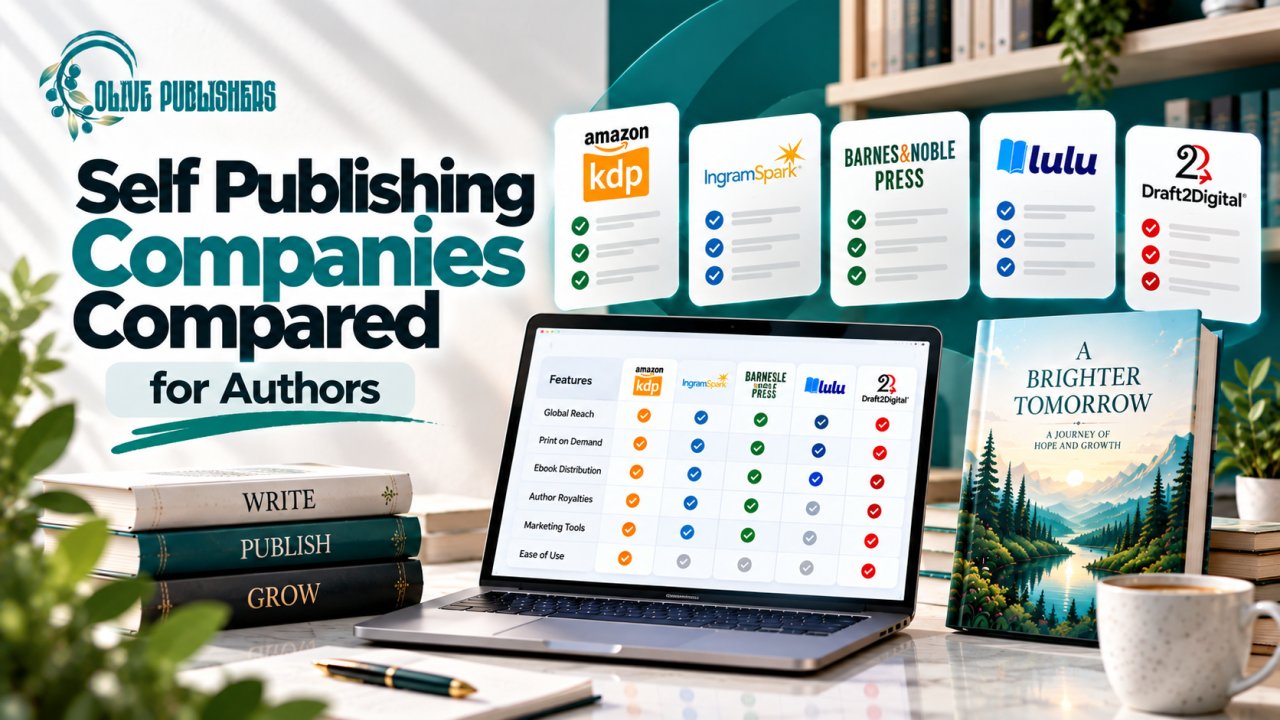
- Platform Comparison Table
- Full-Service Self Publishing Companies: When Do They Make Sense?
- Red Flags When Choosing a Self Publishing Company
- How to Choose the Best Option for Your Situation
- If you are on a tight budget
- If you want bookstore access
- If you write series fiction
- If you are a nonfiction or business author
- If you are publishing a children's book
- A Simple Setup Most New Authors Can Follow
- Questions to Ask Any Self Publishing Company
- Final Thoughts
- Frequently Asked Questions (FAQ's)
- What is the best self publishing company for beginners?
- Which is better, KDP or IngramSpark?
- Is Draft2Digital worth it?
- Are self publishing companies worth paying for?
- How much do self publishing companies charge?
- Do I keep my rights with a self publishing company?
- Can I publish on multiple platforms at once?
- What is the cheapest way to start?
- How do I avoid vanity presses?
- Do I need an ISBN to use these platforms?
Best Self Publishing Companies for New Authors Who Want Control and Fair Terms
Quick answer: For most new authors, Amazon KDP is the best starting platform because it is free, fast and reaches the largest audience. Add Draft2Digital or Kobo Writing Life for wider ebook distribution, IngramSpark for bookstore and library print access, and consider a full-service company only if you want professional editing, design and launch support handled for you. The best choice depends on whether you want to do the work yourself or hire a team.
Searching for the best self publishing companies can be confusing, because the phrase covers two very different things. Some options are platforms, which are tools you use yourself to upload and sell books. Others are service companies, which charge fees to produce and promote your book for you. Mixing them up is how new authors end up overpaying or buying services they do not need.
This guide separates the two, compares the leading options with current information, and gives you a simple way to pick based on your goals, budget and experience. For a side-by-side look at pricing models, you can also read our comparison of self publishing companies. This article focuses on one question: which option is the best fit for a first-time author?
Platforms vs Service Companies: Know the Difference
A self publishing platform lets you upload your finished files and sell through its store or distribution network. You handle editing, design and marketing. Examples include Amazon KDP, IngramSpark, Draft2Digital, Kobo Writing Life and Barnes and Noble Press.
A self publishing service company sells editing, cover design, formatting, distribution setup and marketing, often in packages. Quality, pricing and contract terms vary widely, so due diligence matters.
Most authors use both: they pay for professional help, then publish through one or more platforms in their own name.
What Makes a Self Publishing Company "Best"?
Use these criteria rather than marketing claims.
1. Rights ownership. You should keep your copyright and the right to leave.
2. Transparent costs. Fees and royalty splits should be written clearly.
3. Distribution reach. Where will your book actually be available?
4. Royalty rate. Your share after retailer and printing costs.
5. Quality control. Professional editing and design standards.
6. Support. Real people who answer questions.
7. Reputation. Independent reviews and author complaints.
The Best Self Publishing Platforms for New Authors
1. Amazon KDP (Kindle Direct Publishing)
Best for: first-time authors who want the biggest audience with no upfront cost.
KDP lets you publish ebooks, paperbacks and hardcovers for free. Amazon states that authors can earn up to 70 percent royalties on ebooks and up to 60 percent on print, with printing costs deducted from print royalties. Ebook royalty tiers depend on your list price and the territory, so always check the pricing rules in your dashboard before you set a price.
• Pros: no setup fee, fast review (usually within a few days), free ISBN option for print, built-in print on demand.
• Cons: KDP's free ISBN is registered to Amazon and cannot be used elsewhere, expanded distribution pays a lower print rate (40 percent), and competition on Amazon is intense.
• Watch for: low list prices that leave almost nothing after printing costs.
2. IngramSpark
Best for: authors who want bookstore and library availability for print books.
IngramSpark connects your book to the Ingram network, which is how many bookstores and libraries order titles. Recent reporting indicates IngramSpark has no title setup fee, though it changed its fee structure in 2026, including a market access fee of about 1.875 percent of list price. Policies on revisions and print costs have also changed, so confirm current terms on the platform before uploading.
• Pros: wide print distribution, hardcover and color options, professional reputation.
• Cons: stricter file requirements, wholesale discounts reduce per-copy earnings, slower payouts than some alternatives.
• Best use: pair it with KDP so Amazon sales stay direct while other retailers order through Ingram.
3. Draft2Digital
Best for: simple, one-upload ebook distribution to many stores and libraries.
Draft2Digital distributes your ebook to retailers such as Apple Books, Kobo and Barnes and Noble, plus library platforms. It has historically charged no upfront fee and taken about 10 percent commission. Because some third-party reports describe newer fee terms, check Draft2Digital's own pricing page before you commit.
• Pros: friendly interface, free formatting tools, one dashboard for many retailers.
• Cons: the commission reduces royalties compared with going direct to each store.
4. Kobo Writing Life
Best for: authors who want direct access to Kobo's international readers, especially in Canada and parts of Europe.
Kobo Writing Life is free to use and reports a 70 percent royalty rate for ebooks priced at $2.99 and above, dropping to 45 percent below that threshold. It does not offer print.
• Pros: strong international audience, promotional tools, no listing fee.
• Cons: ebook only.
5. Barnes and Noble Press
Best for: US authors who want a direct line to Barnes and Noble's online store and its Nook readers.
B&N Press is free and offers print and ebook options for US authors, with royalty rates that vary by format and price.
• Pros: no cost, direct retailer relationship.
• Cons: distribution is mostly limited to Barnes and Noble, and it may not serve non-US authors.
6. Lulu and BookVault
Best for: authors who want print flexibility, such as special formats, direct-to-reader sales or non-US printing.
These print-focused services give more control over formats and can support direct sales from your own website. They are worth considering as a second step once your core distribution is in place.
Platform Comparison Table
|
Platform |
Cost to Start |
Best For |
Print |
Ebook |
Distribution Reach |
|
Amazon KDP |
Free |
First book, largest audience |
Yes |
Yes |
Amazon, with optional expanded print |
|
IngramSpark |
No title setup fee reported; market access fee applies |
Bookstores and libraries |
Yes |
Yes |
Very wide print network |
|
Draft2Digital |
Reported free upfront; commission applies |
Wide ebook reach |
Limited |
Yes |
Many ebook retailers and libraries |
|
Kobo Writing Life |
Free |
International ebook readers |
No |
Yes |
Kobo stores worldwide |
|
Barnes and Noble Press |
Free |
B&N audience |
Yes |
Yes |
Mainly Barnes and Noble |
Fees and policies change frequently, so treat this table as a starting point and verify details on each platform's official page.
Full-Service Self Publishing Companies: When Do They Make Sense?
Platforms are cheap but demand time and skill. A service company makes sense when:
• You do not want to learn file formatting, metadata and retailer rules.
• Your book represents your business or professional reputation.
• You have a launch date or event to hit.
• You want one team accountable for quality.
Good service companies provide editing, proofreading, cover design, interior formatting, ISBN guidance, distribution setup and marketing. Strong providers keep you as the publisher of record and let you hold your own accounts, so you can leave without losing your book.
If this is what you need, explore Olive Publishers' book publishing services and self-publishing services to see how a coordinated team can handle production while you stay in control of your rights.
Red Flags When Choosing a Self Publishing Company
Protect yourself by watching for these warning signs.
• Rights grabs. The company claims ownership or exclusive rights to your book.
• Vague royalty terms. Percentages without clear definitions of "net" or "profit."
• Pressure to pay quickly. Limited-time offers that discourage you from comparing.
• Guaranteed bestseller promises. No honest company can guarantee sales.
• Inflated retail prices. Overpriced books rarely sell.
• Required bulk purchases. Buying large print runs you did not plan for.
• No named team or contact. Anonymous customer service.
• Unrealistic review claims. Fake reviews are against retailer rules.
Before signing, ask for the contract in writing, confirm you keep your ISBN and files, and search the company name with the word "complaints" or "reviews."
How to Choose the Best Option for Your Situation
If you are on a tight budget
Start with KDP for print and ebook. Add Kobo or Draft2Digital once you have a polished book. Spend your money on editing and a cover first.
If you want bookstore access
Use IngramSpark for print and expect to do local outreach. Bookstores want returnable, discounted books, which affects your pricing.
If you write series fiction
Consider going "wide," meaning publishing on multiple retailers, since different readers shop in different stores. KDP Select exclusivity can help new books gain traction, but it limits where the ebook is sold, so weigh the trade-off.
If you are a nonfiction or business author
Prioritize a professional editor, a strong cover, and a clean interior. Pair platform publishing with a plan to use the book for credibility, speaking and lead generation. Our book marketing services are built around that goal.
If you are publishing a children's book
Illustration quality and print quality matter most. Consider a team that handles illustration and formatting for picture books.
A Simple Setup Most New Authors Can Follow
1. Hire help for editing and cover design.
2. Format your ebook and print interior.
3. Buy an ISBN if you plan to sell beyond Amazon.
4. Publish on KDP first.
5. Add Draft2Digital or Kobo for ebook reach.
6. Add IngramSpark if you want bookstore and library access.
7. Build a simple author website and email list.
8. Launch with a marketing plan instead of hoping for organic discovery.
Questions to Ask Any Self Publishing Company
• Who owns the copyright, ISBN and final files?
• What exactly is included in the package?
• How are royalties calculated, and how often are they paid?
• Can I see real sample work?
• What happens if I want to cancel?
• Is there a revision limit?
• Where will my book actually be available?
• Will I receive access to my own retailer accounts?
If a company hesitates on any of these, move on.
Final Thoughts
The best self publishing company is the one that matches your goals, protects your rights and delivers a professional book. Start with the platforms that cost nothing, invest where readers will notice, and be wary of anyone who promises results they cannot control.
If you want a partner that handles editing, design, formatting, publishing and promotion while you keep ownership, the team at Olive Publishers can walk you through a clear plan for your manuscript. Contact us to get started with a straightforward consultation.
Frequently Asked Questions (FAQ's)
What is the best self publishing company for beginners?
For most beginners, Amazon KDP is the best starting point because it is free, fast and reaches the largest number of readers. Authors who need professional production often pair KDP with a trusted service provider.
Which is better, KDP or IngramSpark?
They serve different goals. KDP is stronger for Amazon sales and easy setup. IngramSpark is stronger for bookstore and library distribution. Many authors use both.
Is Draft2Digital worth it?
It is worth it if you want one upload to reach many ebook stores and libraries and you accept a commission in exchange for convenience. Going direct to each retailer can pay slightly more but takes more effort.
Are self publishing companies worth paying for?
They can be, when they provide real editorial and design quality and keep you as the rights owner. They are not worth it if they charge high fees for services you could buy separately for less or if they take control of your book.
How much do self publishing companies charge?
Prices vary widely depending on services. Always compare itemized quotes, and be cautious with packages that bundle unnecessary extras.
Do I keep my rights with a self publishing company?
You should. Reputable companies let you retain copyright and ownership of your files and accounts. Confirm this in the contract before paying.
Can I publish on multiple platforms at once?
Yes, unless you enroll an ebook in an exclusive program such as KDP Select. Print editions can usually be sold across platforms with the right ISBN setup.
What is the cheapest way to start?
Publishing directly through KDP costs nothing to list. Your main costs are professional editing and cover design, which are worth budgeting for.
How do I avoid vanity presses?
Avoid companies that require you to sign away your rights, demand large upfront fees with vague deliverables, or promise guaranteed sales. Look for transparent pricing and independent reviews.
Do I need an ISBN to use these platforms?
Platforms such as KDP provide free ISBNs for print books with limits, while buying your own ISBN lets you control the publisher name and distribute widely. In the US, a single ISBN from Bowker costs $125 and a block of ten costs $295.