On this page (30)
- What Is Self Publishing and Is It Worth It for Authors in 2026
- What Is Self Publishing?
- The key terms you will see
- How Self Publishing Works Step by Step
- Self Publishing by the Numbers
- Self Publishing vs Traditional Publishing
- What Does Self Publishing Cost?
- How Much Money Can You Make Self Publishing?
- The Real Pros of Self Publishing
- The Real Cons of Self Publishing
- Is Self Publishing Worth It? A Decision Framework
- Self publishing is probably worth it if:
- Traditional publishing may suit you better if:
- Hybrid or assisted self publishing may help if:
- Common Self Publishing Mistakes to Avoid
- How to Make Self Publishing Worth It
- Self Publishing Myths, Corrected
- A Realistic Timeline
- The Bottom Line
- Frequently Asked Questions
- What is self publishing in simple terms?
- Is self publishing worth it in 2026?
- How much does self publishing cost?
- How much do self-published authors make?
- Can a self-published book become a bestseller?
- Do I need an ISBN to self publish?
- What is the difference between self publishing and vanity publishing?
- Is self publishing better than traditional publishing?
- How long does self publishing take?
- Can I self publish and still get a traditional deal later?
What Is Self Publishing and Is It Worth It for Authors in 2026
Quick answer: Self publishing means you, the author, take responsibility for producing and releasing your own book instead of selling the rights to a traditional publisher. You keep creative control and a much larger share of each sale, but you also pay for (or personally handle) editing, design, formatting, distribution and marketing. It is worth it for authors who want control, speed and higher royalties and who are willing to treat publishing like a small business.
If you have finished a manuscript, or you are close to finishing one, you have probably asked yourself two questions: what is self publishing, really, and is it worth the effort and money? Both questions deserve honest answers, because the wrong choice can cost you months of time or thousands of dollars.
This guide explains how self publishing works in plain language, what the numbers actually look like, and how to decide whether it fits your goals. We will not oversell it. Self publishing is a powerful option, but it rewards some kinds of authors far more than others.
What Is Self Publishing?
Self publishing is the process of publishing a book without a traditional publishing house. The author owns the rights, funds the production, chooses the title, cover and price, and decides where the book is sold. In return, the author keeps most of the revenue.
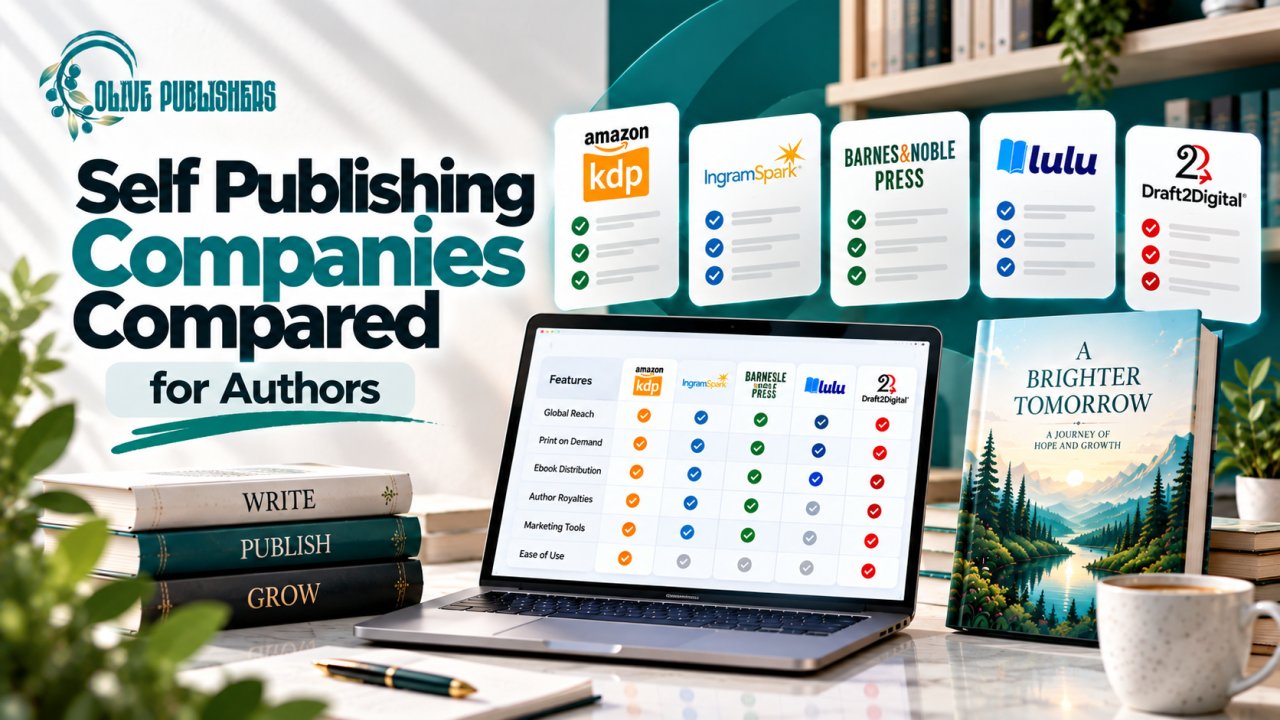
The word "self" is slightly misleading. Self-published authors rarely do everything alone. Most hire freelance or agency professionals for editing, cover design, interior layout and marketing, then upload the finished files to retail and print-on-demand platforms such as Amazon Kindle Direct Publishing (KDP), IngramSpark, Draft2Digital or Kobo Writing Life.
The key terms you will see
• Traditional publishing: a publisher buys or licenses your rights, pays you royalties (and sometimes an advance), and handles production and distribution.
• Self publishing: you hold the rights and manage or purchase every service yourself.
• Hybrid publishing: you pay a company to produce and distribute your book, and the contract terms vary widely, so reading them carefully matters.
• Vanity press: a company that charges high fees, often with little real distribution or editorial standards. Avoid these.
• Print on demand (POD): books are printed only when ordered, so there is no inventory cost.
How Self Publishing Works Step by Step
The process is easier to understand once you see it as a production pipeline.
1. Finish the manuscript. A complete, revised draft comes first.
2. Edit professionally. Developmental editing, copyediting and proofreading catch different problems.
3. Design the cover. Your cover is your main sales tool on a crowded retail page.
4. Format the interior. Print and ebook files have different technical requirements.
5. Choose an ISBN strategy. You can buy your own or use a free one from a platform, each with trade-offs.
6. Upload and set your price. You choose categories, keywords, your description and your royalty options.
7. Launch and market. Visibility is the part most new authors underestimate.
If you want the full walkthrough, our complete self-publishing guide for first-time authors covers each stage in depth.
Self Publishing by the Numbers
Self publishing is no longer a niche. According to Bowker data reported by Publishers Weekly, the number of self-published titles with ISBNs in the United States passed 3.5 million in 2025, up about 38.7 percent from roughly 2.5 million the year before. Traditionally published titles in the same data set totaled about 642,000. In other words, self-published titles outnumber traditional titles by a wide margin.
Two cautions are worth keeping in mind. First, Bowker counts titles with ISBNs, so the figures miss books published without one. Second, more titles also means more competition. The ease of publishing is exactly why standing out takes deliberate effort.
Self Publishing vs Traditional Publishing
The real question is not which route is "better." It is which route matches your book and your goals.
|
Factor |
Self Publishing |
Traditional Publishing |
|
Who owns the rights |
You |
Usually the publisher, for a set term |
|
Upfront cost |
You pay for services |
Publisher pays; you may receive an advance |
|
Royalty rate |
Often 35% to 70% on ebooks, up to 60% on print before printing costs |
Commonly around 10% to 15% of retail on hardcovers |
|
Time to market |
Weeks to months |
Often a year or more after signing |
|
Creative control |
Full |
Shared, with publisher approval |
|
Bookstore access |
Possible, but harder |
Easier through established sales teams |
|
Marketing support |
Yours to arrange |
Varies, often limited for debut authors |
|
Entry barrier |
None |
Usually need an agent and a strong submission |
Royalty figures come from platform and industry sources and change over time, so confirm current rates on each platform before you set your price.
What Does Self Publishing Cost?
The honest range is wide. You can publish an ebook for very little if you do everything yourself, or invest several thousand dollars for a polished, professionally produced book.
Typical cost categories include:
• Editing: usually the largest single expense for a full-length book.
• Cover design: a professional cover costs far less than a poor cover costs you in lost sales.
• Formatting: clean interior layout for print and ebook.
• ISBN: in the US, Bowker sells a single ISBN for $125 and a block of 10 for $295.
• Copyright registration: optional, but inexpensive. The US Copyright Office currently lists $45 for a single-author, single-work online application, although fee changes have been proposed, so check the current schedule.
• Marketing: from free social posting to paid ads and professional campaigns.
For a deeper breakdown, read our guide to the cheapest way to self publish a book and compare it with what a professional package includes.
How Much Money Can You Make Self Publishing?
Self-published authors keep a larger share per sale, but earning a living depends on volume, pricing and marketing.
On Amazon KDP, ebooks can earn up to 70 percent royalties within eligible price ranges, and print books earn up to 60 percent of the list price minus printing costs. If you opt into expanded distribution to reach other retailers, the print royalty rate drops to 40 percent.
Here is a simple illustration with made-up numbers to show the logic, not a promise. Suppose your ebook sells for $4.99 at a 70 percent royalty rate after small delivery fees. You would earn roughly $3.40 per sale. If your paperback lists at $14.99 and printing costs $4, a 60 percent royalty yields about $5 per copy. Selling 1,000 books across formats could reasonably generate a few thousand dollars, which is meaningful but is not the same as a full-time income.
The authors who earn the most tend to share three habits: they publish multiple books, they write in a genre with strong reader demand, and they invest in professional presentation and consistent marketing.
The Real Pros of Self Publishing
1. You own your rights. No reversion clauses, no permission requests.
2. Speed. You can publish when the book is ready, not when a catalog slot opens.
3. Higher per-copy earnings. Your share of each sale is larger.
4. Creative control. You decide the title, cover, price and tone.
5. Flexibility. You can update files, change prices and test new covers.
6. Niche viability. Books that are too specialized for a big publisher can still find their readers.
The Real Cons of Self Publishing
1. Upfront investment. Professional quality costs money.
2. You carry the marketing burden. Retail platforms list your book, but they do not promote it for you.
3. Bookstore distribution is harder. Physical shelf placement usually requires extra effort and a returns strategy.
4. Quality control is on you. Skipping editing or design shows immediately in reviews.
5. Risk of scams. Predatory services target new authors. Always research a company before paying.
Is Self Publishing Worth It? A Decision Framework
Instead of a yes or no, use these questions.
Self publishing is probably worth it if:
• You want to keep control of your rights and creative decisions.
• You have a defined audience, such as clients, a community, a congregation or a professional niche.
• Your book supports a business, speaking career or personal brand.
• You write in genres where indie authors thrive, such as romance, fantasy, mystery and nonfiction how-to.
• You are comfortable spending money on professional help and time on marketing.
Traditional publishing may suit you better if:
• You want your book physically stocked in major bookstores.
• You write literary fiction or narrative nonfiction for a broad audience and want a major publisher's prestige.
• You prefer not to fund production.
• You are patient with a long querying process.
Hybrid or assisted self publishing may help if:
• You want professional production without managing five freelancers.
• You value a single point of contact for editing, design, formatting, distribution and marketing.
If the third option sounds appealing, services like Olive Publishers' self-publishing support are designed to give authors one coordinated team while the author retains ownership. Whatever company you choose, confirm in writing that you keep your rights and your royalties.
Common Self Publishing Mistakes to Avoid
• Skipping professional editing. Typos and structural problems are the top source of negative reviews.
• Using a template cover that looks like every other book. Genre expectations matter.
• Ignoring metadata. Categories, keywords and your book description influence discovery.
• Pricing without checking royalty thresholds. Being just outside a royalty band can reduce earnings sharply.
• Launching without an audience. Even a small email list helps.
• Signing with unclear contracts. Watch for hidden fees, rights grabs and vague distribution promises.
How to Make Self Publishing Worth It
The authors who succeed treat their book as a product.
Start with a strong foundation. Invest in editing and a professional cover. If you need help, a dedicated book editing service and book cover design can raise perceived quality immediately.
Write a description that sells. Your description is a sales letter. Lead with the reader's problem or the story's hook, not a summary of chapters.
Build an author platform early. A simple website and an email list give you a way to reach readers directly. Our author website services help new authors set this up.
Plan your launch. Collect early reviews, line up reader communities and schedule promotional activity. Structured book marketing support can save months of trial and error.
Think in series or catalogs. Readers who enjoy one book often buy the next. Your second and third books usually perform better than your first.
Self Publishing Myths, Corrected
"Self publishing is only for authors who got rejected." Many authors choose it on purpose for control, speed and royalties. Some traditionally published authors self publish their backlist after rights revert.
"Self-published books look amateur." They do only when authors skip professional editing and design. Well-produced indie books are indistinguishable from traditional releases.
"Amazon pays you automatically and promotes you." Amazon provides the store, not the audience.
"You cannot get into bookstores." You can, but it takes distribution through wholesalers, returnable terms and local outreach.
"It is free." Publishing can technically cost nothing, but professional results rarely do.
A Realistic Timeline
• Manuscript finalization: varies by author.
• Editing: several weeks for a full-length book.
• Cover and formatting: a few weeks, often in parallel.
• Platform review: KDP states that publishing typically takes up to 72 hours, though print files can take longer, so build in a buffer.
• Launch and early marketing: plan at least a month.
Most well-prepared authors can go from final manuscript to published book in two to four months.
The Bottom Line
Self publishing is worth it when you go in with clear expectations: you are the publisher, quality matters, and marketing is part of the job. If you want guidance without losing ownership of your book, the team at Olive Publishers can help you plan editing, design, formatting and launch around your goals. Reach out to discuss your manuscript and get a clear, no-pressure plan.
Frequently Asked Questions
What is self publishing in simple terms?
Self publishing means you publish and sell your own book without a traditional publishing house. You keep the rights, pay for production, and earn a larger share of each sale.
Is self publishing worth it in 2026?
It is worth it if you value control, speed and higher royalties and you are willing to invest in quality and marketing. It is less suitable if your main goal is guaranteed bookstore placement without effort.
How much does self publishing cost?
Costs range from near zero for a do-it-yourself ebook to several thousand dollars for professional editing, design, formatting and marketing. Editing and cover design are usually the largest expenses.
How much do self-published authors make?
Earnings vary enormously. Per-copy income can be higher than traditional royalties, but total income depends on how many copies you sell, which depends on genre, quality, pricing and marketing.
Can a self-published book become a bestseller?
Yes. Many indie books have performed strongly, particularly in genre fiction and niche nonfiction. Success usually requires a professional product and consistent promotion.
Do I need an ISBN to self publish?
For print books and wide distribution, an ISBN is standard. Platforms like KDP offer free ISBNs with limits on where the book can be sold, while buying your own gives you more flexibility.
What is the difference between self publishing and vanity publishing?
In self publishing you control the rights and choose the services. A vanity press charges authors high fees, often takes control of rights or inflates prices, and offers little real distribution. Always read the contract.
Is self publishing better than traditional publishing?
Neither is universally better. Self publishing favors control and speed; traditional publishing favors bookstore reach and publisher-funded production. Your book and goals decide.
How long does self publishing take?
Many authors finish in two to four months from final manuscript to launch, depending on editing needs and how quickly design and formatting are completed.
Can I self publish and still get a traditional deal later?
Yes. Strong self-published sales can attract agents and publishers, and some traditional publishers actively sign proven indie authors.