On this page (34)
- Why brands and experts invest in custom publishing
- What custom publishing services include
- Common formats and when to use them
- Who benefits from custom publishing services
- A practical step by step process
- Step 1 Define the outcome
- Step 2 Research the audience
- Step 3 Build a clear brief
- Step 4 Test the concept
- Step 5 Write and edit for clarity
- Step 6 Design, produce, and review
- Step 7 Publish and measure
- Editorial standards and honest branding
- Design and production planning
- Rights, approvals, and ownership
- Prepare distribution and the launch
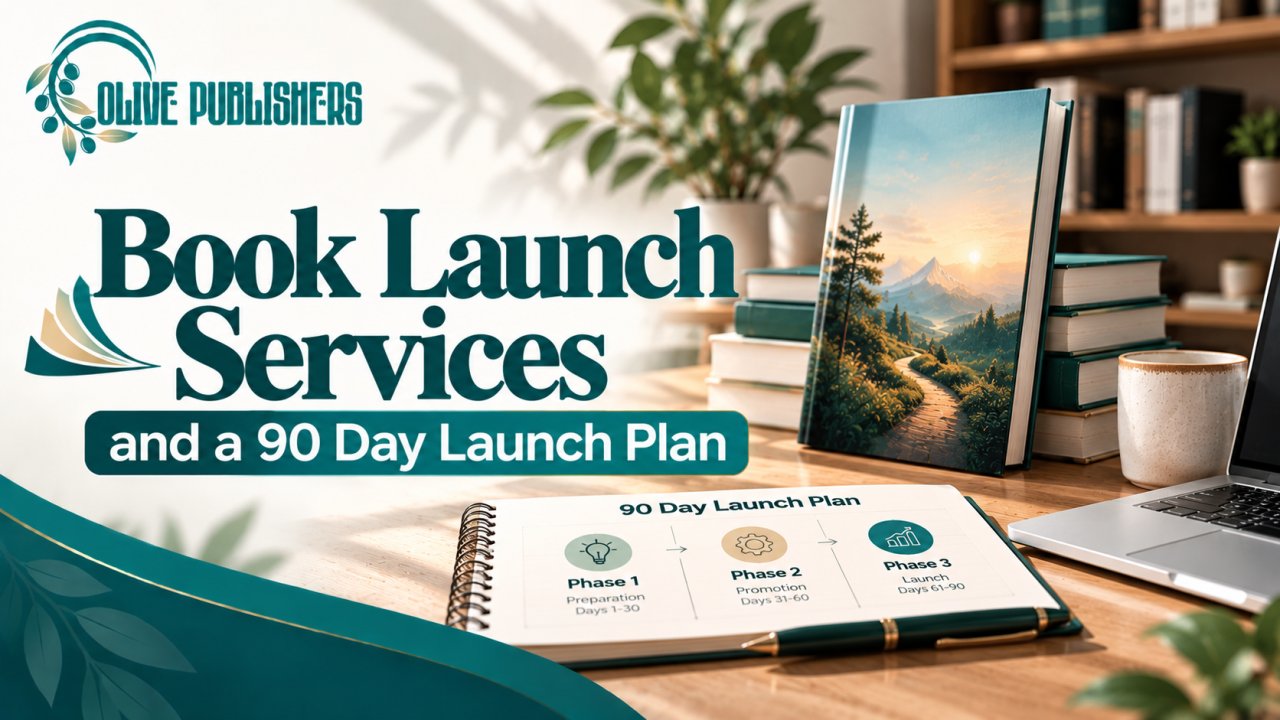
- A simple launch timeline
- How to measure a custom publication
- Comparing ways to produce a branded publication
- Budget and timeline considerations
- A realistic example of a branded publication
- How to evaluate a custom publishing provider
- Common mistakes to avoid
- How Olive Publishers can support your project
- Frequently asked questions
- What are custom publishing services?
- What is branded content publishing?
- How do I plan a branded publication launch?
- Should a brand hire writers and designers separately?
- What rights should be clarified before starting?
- How do I measure a custom publication?
- Can a branded book support thought leadership?
- How early should publishing services be involved?
- Conclusion
According to the 2025 Edelman and LinkedIn B2B Thought Leadership report, 64% of decision-makers spend more than an hour every week reading thought leadership content. That is a large, attentive audience, and it explains why founders, associations, professional firms, and subject experts are turning ideas into books, ebooks, guides, and reports. Custom publishing services help turn that message into a finished publication that readers actually want to open.
The goal is not to dress up promotional copy as a book. It is to create a useful publication with a clear audience, a strong editorial purpose, professional production, and a launch plan that fits the format. Done well, a branded publication earns trust before a sales conversation ever starts.
Quick answer. A successful custom publishing project begins with the reader and the job the publication should do. Define the format, editorial standards, contributors, design needs, approvals, distribution, rights, and success measures before production starts. Strong work connects content quality with brand goals and never hides the commercial purpose from readers.
Why brands and experts invest in custom publishing
Buyers say they prefer substance to sales pitches. The 2024 Edelman and LinkedIn research found that 73% of B2B buyers consider an organization’s thought leadership a more trustworthy way to judge its capabilities than traditional marketing materials and product sheets. The same research found that 75% of decision-makers said one compelling piece of thought leadership led them to look into a service they had not been considering.
The opportunity comes with a warning. About 55% of B2B buyers move on from thought leadership that fails to hold their interest within the first minute. Quality decides the outcome. A publication that is vague, repetitive, or openly promotional can do more harm than having no publication at all.
Discovery is also changing. TopRank Marketing and Ascend2 reported in 2026 that 32% of professionals now find thought leadership through generative AI tools. Clear structure, accurate facts, and original insight help your publication get found by readers and by the systems that summarize content for them.
What custom publishing services include
Custom publishing services are a coordinated set of editorial, design, and production tasks built around one client and one goal. The exact scope should come from the brief, not from a fixed package. Depending on the project, services may include the following.
• Project brief, audience definition, and editorial strategy
• Content planning, outlines, and research support
• Writing or ghostwriting, with expert interviews where needed
• Developmental editing, copyediting, and proofreading
• Cover design, interior layout, charts, and illustration
• Print and digital formatting, ISBN setup, and file preparation
• Distribution setup for retailers, your website, or private channels
• Launch assets, outreach, and performance reporting
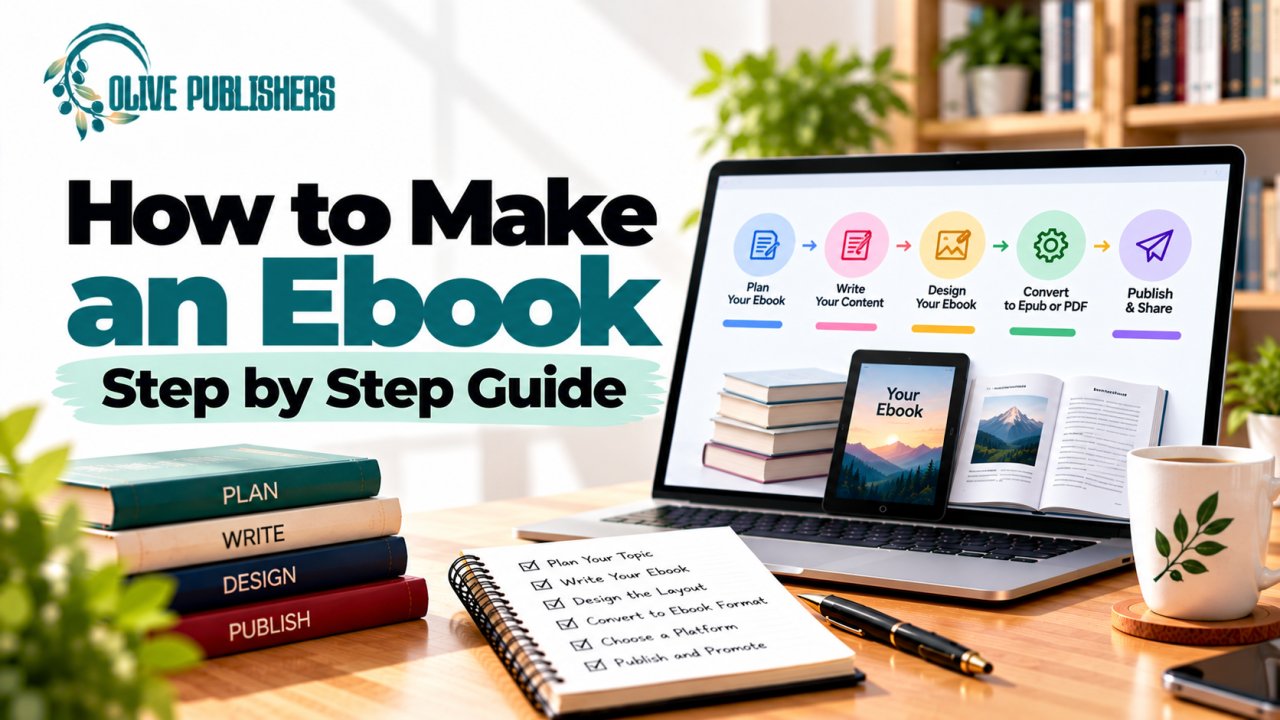
If the writing itself is the hard part, you can read how ghostwriting works for book authors or explore our ghostwriting services in New York. For shorter digital formats, see our guide to ebook writing services.
Common formats and when to use them
|
Format |
Best fit |
What to plan for |
|
Book |
Founders and experts building long-term authority |
Editing depth, cover design, ISBN, and print and ebook production |
|
Ebook or guide |
Lead generation and customer education |
Clean formatting, link testing, and a clear next step for the reader |
|
Research report |
Associations and firms sharing original data |
Source checks, charts, and expert review before release |
|
Branded gift book |
Client appreciation, events, and partner programs |
Print quality, quantities, and delivery dates |
|
Anthology |
Communities and member organizations |
Contributor agreements, consistent style, and clear rights |
Who benefits from custom publishing services
The audience for these services includes founders, professional firms, associations, nonprofit groups, publishers, and individual subject experts. Their needs differ. A consultant may want a book that opens doors to speaking invitations. An association may need a member guide that is accurate, accessible, and easy to update. A company may want an ebook that supports its sales team.
What these clients share is a message worth publishing and limited time to manage production. A good provider asks about the reader first, then recommends the format, instead of selling the same package to everyone. If you are new to the process, our overview of how to make a book explains the main stages in plain language.
A practical step by step process
Step 1 Define the outcome
Write one sentence that describes what the publication should help the reader or organization do. For example, a consulting firm might want prospects to understand its method well enough to ask for a meeting. Avoid vague targets such as improving brand awareness. Choose a specific purpose and list the evidence that would show the project worked.
Step 2 Research the audience
Study the questions your readers ask, the words they use, and the decisions they face. Interview customers or members if you can. Look at what competitors and respected publications already say, then find the gaps. The aim is to offer a clearer explanation or fresher evidence, not to copy what exists.
Step 3 Build a clear brief
Document the audience, main question, format, length, tone, contributors, design needs, distribution plan, and approval owner. Add boundaries for claims that must not be made, and name the source for any statistic or policy detail. A strong brief lets writers and designers make good decisions without guessing, and it prevents arguments late in production.
Step 4 Test the concept
Before committing to full production, create a sample chapter, a prototype layout, or a short pilot. This shows whether the tone and format suit the audience while changes are still inexpensive. If you are building a nonfiction book, a strong book proposal can serve as the concept test.
Step 5 Write and edit for clarity
Answer the main question early and explain your reasoning after it. Use examples that match your readers and define terms before relying on them. Each section should add a distinct idea, comparison, or piece of practical guidance. Developmental editing, copyediting, and proofreading should happen in that order, each on a stable draft.
Step 6 Design, produce, and review
Design should follow the brand system while keeping the publication readable. Check facts, links, captions, image permissions, and terminology. Ask someone who represents the intended reader to review the unclear parts. Verify that every service description and call to action matches what your business can really provide.
Step 7 Publish and measure
After release, track measures tied to your goal and record a baseline first. Give the publication enough time to gather meaningful evidence, then use the results to improve the next project.
Editorial standards and honest branding
Readers forgive a brand for having a point of view. They do not forgive a publication that pretends to be neutral while selling something. State clearly who produced the publication and why. Use named experts, original data, and real examples instead of generic claims. When a contributor is paid or has a financial interest, say so.
A short editorial standards sheet helps every contributor stay consistent. Include voice and tone, how sources are checked, how corrections are handled, and which topics need legal or specialist review. This keeps the project credible and gives you a fair way to judge drafts.
Design and production planning
Publishing projects have dependencies. The designer needs reliable copy and image assets, the editor needs stable drafts, the production team needs final specifications, and the launch owner needs approved messaging. Your schedule should show each handoff and name who decides when feedback conflicts.
Plan the technical checks for each format. A digital guide needs link testing and review on phones, tablets, and desktops. A printed book needs attention to trim size, margins, image resolution, and a final proof. Our ebook formatting checklist covers common digital problems, and our breakdown of book cover design services cost helps you budget for the most visible part of the project.
If the project is a book, you will also need an ISBN for each format. Read how to get an ISBN before you finalize the files. For branded books that need small, flexible print runs, print on demand can reduce upfront cost and storage.
Rights, approvals, and ownership
Put responsibilities, revision terms, usage rights, and payment milestones in writing before work begins. Clarify who owns the manuscript, images, illustrations, and design files, and which licenses apply. Do not assume an image found online is free to reuse. Confirm whether contributors or third parties keep any rights, and how the publication may be reused, edited, or excerpted later.
Name one final decision maker. Projects slow down when five people give conflicting feedback and nobody can resolve it. Keep one source of truth for approved copy, images, permissions, and versions, and label drafts clearly. For complex rights or licensing questions, seek qualified legal advice.
Prepare distribution and the launch
Publishing a file does not create an audience. Decide where the publication will live and how your readers will find it. Channels may include your website, email list, events, partner organizations, sales conversations, and retailer platforms. Give each channel a clear role and a message that suits it.
A simple launch timeline
• Eight to six weeks before release, finalize the files and confirm the distribution setup
• Six to four weeks before release, invite early readers and partners to preview the publication
• Four to two weeks before release, schedule emails, social posts, and any events
• Release week, send announcements, check links, and monitor for technical errors
• Four weeks after release, review results, collect reader feedback, and plan updates
Make the next step easy to understand. A reader might be invited to download a related resource, contact your team, attend an event, or read another publication. Keep the call to action proportionate to the content. For a deeper look at promotion options, see our guide to book marketing services.
How to measure a custom publication
Set a measurement plan before release, because it is hard to prove value afterward. Only 42% of marketers say they can prove content marketing return on investment to leadership, and teams that can prove it report 3.1 times higher budget growth. Measurement is not a formality. It decides whether you get to publish the next project.
|
Goal |
Useful measures |
Review timing |
|
Authority and awareness |
Downloads, event invitations, media mentions, and partner interest |
Monthly for the first three months |
|
Lead generation |
Qualified inquiries, meetings booked, and sales conversations that mention the publication |
Weekly in launch month, then monthly |
|
Member or client education |
Reader feedback, usage in training, and support questions reduced |
Quarterly |
|
Book sales |
Units sold, reviews, and retailer page traffic |
Daily in launch week, then weekly |
Add qualitative feedback to the numbers. Ask clients, members, or staff who use the publication what they found useful and what confused them. A publication meant to educate current clients should not be judged by the same metrics as a direct-response campaign.
Comparing ways to produce a branded publication
|
Approach |
Best fit |
Strength |
Watch out for |
|
Do it in-house |
A team with time and relevant skills |
Direct control of voice and priorities |
Work stalls when ownership is unclear |
|
Hire separate specialists |
A strong internal project manager |
Deep skill in each task |
More handoffs and more coordination |
|
Use a coordinated provider |
Writing, design, and production depend on each other |
Fewer handoffs and one point of accountability |
Confirm each deliverable and who approves it |
|
Use a hybrid model |
Internal experts who can review outside work |
Combines subject knowledge with added capacity |
Needs a named decision maker and shared standards |
Budget and timeline considerations
Costs and timelines vary widely because every project is different. A short guide with light design can move quickly, while a full-length book with interviews, original research, and print production needs several months. The main drivers are length, research depth, the number of contributors, design complexity, and how many revision rounds you expect.
Ask every provider for a written scope with named deliverables, a schedule with milestones, and a clear list of what is not included. Separate essential production costs from optional extras such as promotion, events, or audiobook editions. Hold some budget back for corrections and updates after release, since real reader feedback often shows what needs improving.
A realistic example of a branded publication
Imagine a financial planning firm that wants a guide for new clients. The team defines the reader as a first-time investor with a specific question, interviews two advisors, and writes a 40 page guide in plain language. An editor checks the facts, a designer builds a clean layout that matches the firm’s brand, and compliance reviews every claim before release.
The firm shares the guide through its email list and sales conversations, then tracks downloads, meetings booked, and client questions. Three months later it uses that feedback to update two sections. The guide works because it solves a real reader problem and because each step had an owner.
How to evaluate a custom publishing provider
A polished sales page is not evidence that the production process will be reliable. Ask for a sample or a small pilot that resembles your real project. Check whether the provider asks useful questions, supports claims with evidence, and responds well to feedback. Then compare the answers to these questions across providers.
• What exact deliverables are included, and which are optional?
• How many revision rounds are included, and what happens after that?
• Who owns the final files, designs, and contributor materials?
• How are deadlines, confidentiality, and communication handled?
• Can you show completed work that is similar to my project?
• What will you need from my team, and by when?
Use a short scorecard to review drafts. Rate each deliverable on reader fit, accuracy, clarity, originality, structure, brand alignment, and readiness to publish, and explain each score with an example. Value is not the same as the lowest quote. A low price may leave out revisions, formats, or project management. For more on comparing options, read how to choose the right book publishing agency in New York and our overview of self-publishing packages.
Common mistakes to avoid
• Starting production before the audience and purpose are defined, which leads to expensive rewrites.
• Promising outcomes that cannot be guaranteed. Sales, sign-ups, and reader response depend on many factors outside the writer’s control.
• Using generic copy that could describe any company. Include real examples, original data, and practical limits.
• Leaving approvals and ownership vague, which delays the schedule and creates disputes.
• Publishing without a final review. Broken links, inaccurate claims, and duplicated sections weaken an otherwise strong publication.
• Treating release day as the finish line instead of reviewing feedback and updating the publication when there is a real reason.
How Olive Publishers can support your project
Olive Publishers is a New York based author services company at 1280 Madison Ave, New York, NY 10128. The team supports writing, editing, formatting, cover design, publishing, and book marketing. The right combination depends on your project, so explain your goals and confirm the scope, deliverables, timeline, and terms before moving forward.
For a productive first conversation, prepare a short brief that covers your audience, current materials, desired outcome, deadline, and the help you think you need. If you are unsure which service fits, describe the problem instead of choosing a package by name. A good provider conversation should clarify options and expectations, not pressure you into work that does not fit. Businesses and authors in the city can also visit our Manhattan page for local details.
Frequently asked questions
What are custom publishing services?
Custom publishing services help organizations and experts plan and produce a publication around a specific audience and purpose. The output may be a book, ebook, report, guide, or other editorial asset. Scope can include writing, editing, design, formatting, production, distribution, and launch support, depending on the agreement.
What is branded content publishing?
Branded content publishing creates material linked to a company or organization while giving readers a clear editorial purpose. It may educate, explain a process, document expertise, or support a campaign. The commercial relationship should be clear whenever readers would reasonably want that context.
How do I plan a branded publication launch?
Define the audience, purpose, format, message, contributors, approval process, distribution channels, timeline, and success measures before production begins. Then build a content brief and production schedule. Connect the launch plan to the reader’s next step instead of treating publication day as the only milestone.
Should a brand hire writers and designers separately?
Separate specialists can work well when the organization has a strong project manager and clear handoffs. A coordinated provider may simplify communication when writing, editing, design, and production depend on each other. Compare accountability and scope, not just the number of vendors.
What rights should be clarified before starting?
Clarify who owns the manuscript, images, illustrations, design files, and other assets. Confirm which licenses apply and whether contributors or third parties keep any rights. The contract should explain reuse, distribution, editing, and attribution.
How do I measure a custom publication?
Choose measures that match the purpose, such as downloads, event use, qualified leads, reader feedback, partner engagement, or sales. Record a baseline and set a review period before launch. Compare results with the goal you wrote down at the start.
Can a branded book support thought leadership?
Yes, when it has real substance. A well-researched book can organize an expert’s ideas and give audiences a deeper understanding of a subject. Its value depends on credibility, original insight, and usefulness, not on branding alone.
How early should publishing services be involved?
Bring in production expertise once the audience, purpose, and rough scope are clear, ideally before the content is finalized. Early coordination keeps format, rights, design, and distribution needs from becoming costly late-stage changes.
Conclusion
Custom publishing services work best when they start with a real audience need and follow a clear process from planning through review. Define the goal, set a useful scope, create original and accurate content, and measure outcomes that match the project. Strong work does not rely on repeated keywords or broad promises. It earns attention by helping readers make a better-informed decision.
Olive Publishers can discuss writing, publishing, and author support based on your project. Contact the team to ask specific questions about scope and next steps.